Repiping a house means replacing the water supply pipes throughout the home with new ones, usually PEX or copper, instead of patching leaks one at a time. Most whole-house repipes cost $4,500 to $15,000 in 2026, and the job typically takes several days. It makes sense when leaks keep coming back, water pressure drops, or the pipes are past their service life. Below we cover how the work goes, what drives the price and how to decide.
TL;DR
- Repiping replaces the home's supply piping, not just one failed section. Spot repairs fix a leak. A repipe removes the cause.
- Typical 2026 cost: $4,500 to $15,000 for most homes. Large or hard-to-access homes can pass $20,000.
- Many repipes take about four to five days of plumbing work, followed by drywall patching and cleanup.
- PEX and copper are the two common materials. The right one depends on your layout, budget and water.
- A permit is almost always needed and should be pulled in the plumber's name.
Table of Contents
- What repiping a house involves
- Signs your house may need repiping
- Repair or repipe: how to decide
- How a house is repiped, step by step
- How long repiping takes
- PEX, copper or CPVC: choosing pipe material
- What repiping a house costs
- Our perspective on repiping
- Repiping with JoCo Plumbing in Rogers, AR
- Preparing your house for a repipe
- FAQ
- Sources
What repiping a house involves
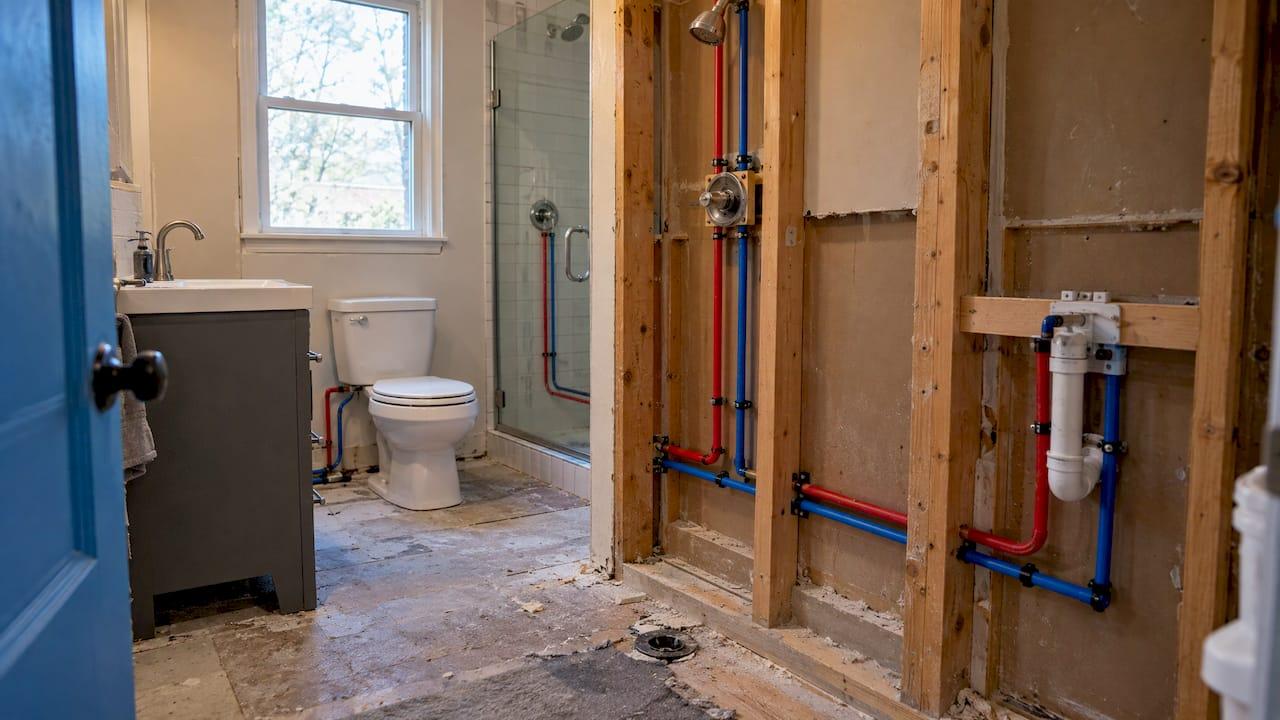
A repipe replaces the pipes that carry clean water to your fixtures: the lines to sinks, showers, toilets, the water heater, washing machine and outdoor spigots. The old lines come out. New lines go in, connect to the main shutoff and to each fixture, and the system is pressure tested and inspected.
That is different from a partial repair. A partial repair swaps one failed section, such as a pinhole leak under a bathroom or a corroded run to a kitchen. A repipe replaces the whole network, or a large part of it, so you are not chasing the next failure a few months later.
A repipe also does not usually cover drain lines, the sewer line or the main line from the street to your house. Those are separate systems. If you suspect trouble there, a plumbing video camera inspection shows what is happening inside the pipe before anyone cuts anything.
Signs your house may need repiping
No single sign proves it. A pattern does. Watch for these:
- Repeated leaks. Two or three pinhole or joint leaks in different spots in a short time suggest the pipes are failing as a system.
- Low or uneven water pressure. Corroded or scaled-up pipes narrow inside. Pressure drops at several fixtures, not just one aerator.
- Discolored water. Brown or rust-colored water from the tap, especially when it has sat unused, can point to corroding pipes.
- Visible corrosion. Green or white crust on copper, or rust and flaking on older steel pipe, at joints and fittings.
- Age and material. Older homes may still have galvanized steel or other pipe types that have run past their expected service life. Even copper has a limit. One home inspectors' guide says copper may last 50 years before it begins to thin.
- Wet spots and stains. Damp drywall, ceiling stains, a musty smell or a water bill that climbs with no change in use.
If you see a few of these, have a licensed plumber look at the system. A leak locator can pinpoint hidden trouble. Our leak detection and repair service is the usual first step, and it tells you whether you have one bad run or a failing system.
Repair or repipe: how to decide
The question is not whether repair is cheaper today. It is what the next few years of repairs will cost, and the damage each leak can do first.
Repair usually fits when:
- One leak has happened and the rest of the pipe is in good shape.
- The failure has a clear local cause, such as a bad fitting, a frozen section or a damaged line.
- The pipe material is sound and not near the end of its life.
Repiping usually fits when:
- Leaks keep appearing in different places.
- Pressure is poor across the house.
- The pipe material is known to fail with age in your area.
- You are already opening walls for a bathroom or kitchen remodel. Access is the costly part of a repipe, so doing both at once can save labor.
- You plan to stay long enough to benefit, or you want the house to be easier to sell with a clean plumbing inspection.
A burst pipe is the other trigger. If one has already flooded part of the house, read our burst pipe repair cost guide, then ask whether the rest of the pipe is the same age and condition.
How a house is repiped, step by step
The sequence is the same in most homes. Details change with the layout.
- Inspection and written plan. The plumber walks the house, counts fixtures, checks pipe type and access, and maps new routes.
- Permit. Almost every jurisdiction requires a plumbing permit for a repipe, and the guide recommends it be pulled in the plumber's name, not the homeowner's. Ask your plumber to handle it.
- Water shutoff and protection. Floors and furniture near the work areas are covered. Water goes off at the main.
- Access openings. Small openings are cut in drywall, usually near fixtures, in closets or along planned runs. Attics, crawl spaces and basements are used where possible to avoid cutting walls.
- Old pipe removal. Old lines are disconnected and pulled or abandoned in place where removal would do more damage.
- New pipe installation. New lines run from the main to each fixture and the water heater, then connect to the fixtures.
- Pressure test and inspection. One guide describes testing at either 1.5 times working pressure or 100 psi, held for at least 15 minutes, with the inspector checking cross-connection control such as hose bib vacuum breakers.
- Patching and cleanup. Openings get patched. Painting and finish work may be billed separately.
Does repiping mean cutting open all your walls?
Not all of them. PEX is flexible, so it can often be fed through walls and attics with fewer and smaller openings. Rigid copper needs straighter runs, which may mean more cuts. A slab foundation, a finished basement or a two-story layout changes the route, and so does the price.
How long repiping takes
Expect most of a week of plumbing work for an average home. One guide lays out a typical pattern: demo and access cuts on day one with the water off, installation across days two to four, then pressure test and inspection on day four or five. Drywall patching and cleanup follow over the next several days.

Water is off for part of each working day. Many families stay home, but plan around it: fill jugs for drinking and cooking, and have a plan for showers and the toilet. If you have small children, a medical need for running water or a home business, ask your plumber how the water shutoff will be staged. A larger or older home may take longer.
PEX, copper or CPVC: choosing pipe material
The two common choices are PEX and copper. CPVC shows up in some projects too.
| Material | Strengths | Trade-offs |
|---|---|---|
| PEX | Flexible, easier to route through walls, expands in many freeze events instead of bursting | Different fittings and code rules apply; check what your jurisdiction accepts |
| Copper | Heat and corrosion resistant, naturally antimicrobial, long service life | Rigid, with higher material and labor cost |
| CPVC | Rigid plastic, lower material cost | Different freeze performance and installation limits |
The comparisons above follow a 2026 pipe materials overview and the home inspectors' guide to home plumbing, which notes copper installs cost more in materials and labor than plastic.
How to choose:
- Layout. Many walls, a slab or tight access favors flexible PEX. Open, straight runs suit copper.
- Budget. Copper costs more. PEX usually brings the total down.
- Water conditions. Water chemistry affects how pipe ages. A water test and a whole-house treatment system can matter as much as the pipe itself.
- Code. Your local code decides what is allowed and how it must be installed.
We go deeper in our guides on PEX versus copper, CPVC versus PEX and how long copper pipe lasts.
If you own a home with older pipe and are thinking about selling, material matters to buyers and insurers too. This explainer on selling a house with polybutylene pipes lays out the options for owners in that situation.
What repiping a house costs
Cost depends on home size, pipe material and access. One 2026 guide puts most whole-house repipes at $4,500 to $15,000, with large or hard-to-access homes above $20,000. A March 2026 pricing guide reports about $4,000 to $15,000 installed, with drywall repair and painting sometimes billed on top. A cost calculator reports national figures near $8,400 for a 2,000 sq ft single-story PEX repipe and $14,500 for copper.

These are national ranges. Your quote depends on your house.
What moves the number:
- Square footage and fixture count. More bathrooms, sinks and appliances mean more pipe and more connections.
- Number of stories. Two-story homes take more routing time.
- Foundation type. Slab homes can need trenching or overhead routing.
- Material. Copper costs more than PEX.
- Access. Finished walls, tile and tight crawl spaces raise labor.
- Permit and inspection fees.
- Drywall, paint and finish repair. Ask whether they are in the quote.
Our guide on whole house repipe cost for Rogers, AR goes through the local factors. We do not publish a set price for repiping, because each house needs a walkthrough first.
Getting a quote you can compare
Ask every plumber to put the same items in writing:
- Pipe material and fitting type
- Number of fixtures included
- Who pulls the permit
- Whether drywall patching and painting are included
- How water shutoff will be handled day to day
- Start date and expected duration
Quotes that list the same scope can be compared line by line. Quotes that do not, cannot.
Our perspective on repiping
We see the same pattern in repipe calls. A homeowner has fixed a leak, then another, then a third. Each repair was reasonable. Together they cost more than the plan they were avoiding.
Our view: look at the whole system before you decide. A camera inspection, a pressure check and a walk through the attic or crawl space give you facts. Then you choose between a targeted fix and a full repipe with real information.
When a repipe is the right call, we want it to be as low-disruption as it can be. That means a written plan, a licensed technician, the permit handled in our name, clear communication on water shutoff days and a straight answer on which material fits your house. We also pair repiping with related work when it makes sense, such as water heater replacement or a water treatment system, so walls are opened once.
Pricing should be transparent. You should know what is in the quote before work starts.
Jonathan
Repiping with JoCo Plumbing in Rogers, AR
We repipe homes in Rogers and the surrounding area. Our licensed technicians inspect the system, explain whether you need a repair or a full repipe, and give you a written scope. We also handle related work in the same visit plan: water heater installation, leak detection, camera inspection and water treatment.

Ready to talk through your home? See our whole house repiping page or call to book an inspection. If water is already coming through a ceiling, go to emergency plumbing repairs first.
Preparing your house for a repipe
A little preparation keeps the job quick:
- Clear the areas around sinks, water heaters, closets and any walls where openings may be cut.
- Move furniture, art and fragile items away from work zones.
- Tell the plumber about pets, small children and anyone who works from home.
- Store drinking water and plan for toilet use during shutoff hours.
- Ask when the inspection will happen so the house is ready on that day.
- Plan the patching. Decide whether you want the plumber, a drywall contractor or your own painter to finish the openings.
If you plan a bathroom or kitchen remodel, schedule the repipe first or at the same time. Opening those walls twice is the most avoidable cost in a remodel.
FAQ
Is repiping a house worth it?
It is worth it when leaks repeat, pressure is poor or the pipes are near the end of their life. A repipe replaces the cause of the problem instead of patching symptoms. If you have had only one isolated leak, a targeted repair may be enough. A plumber's inspection will tell you which case you are in.
How much does it cost to repipe a 2,000 sq ft house?
A national calculator reports a median near $8,400 for a 2,000 sq ft single-story PEX repipe and $14,500 for copper. Your price depends on stories, access, fixtures and finish repair. Get a written quote after an on-site walkthrough.
Can you live in the house during a repipe?
Most families do. Water is off for part of each working day, so plan for drinking water and bathroom use. Ask your plumber how shutoffs will be scheduled and when water returns each evening.
How long does a whole house repipe take?
Many repipes take four to five days of plumbing work, ending with the pressure test and inspection, per a 2026 repipe guide. Patching and cleanup follow. Bigger homes take longer.
Do I need a permit to repipe?
Almost every jurisdiction requires one, and the permit should be pulled by the plumber. Ask your plumber to confirm local requirements before work begins.
Sources
- Whole-House Repipe in 2026: Cost, Timeline, and What to Expect
- Repiping Cost (2026 Pricing Guide)
- Plumbing Replacement Cost Calculator
- Client Resources: What to Know About Home Plumbing
- Plumbing Battle Royale: Copper vs. CPVC vs. PEX Tubing
- Selling a House With Polybutylene Pipes: Your Options