
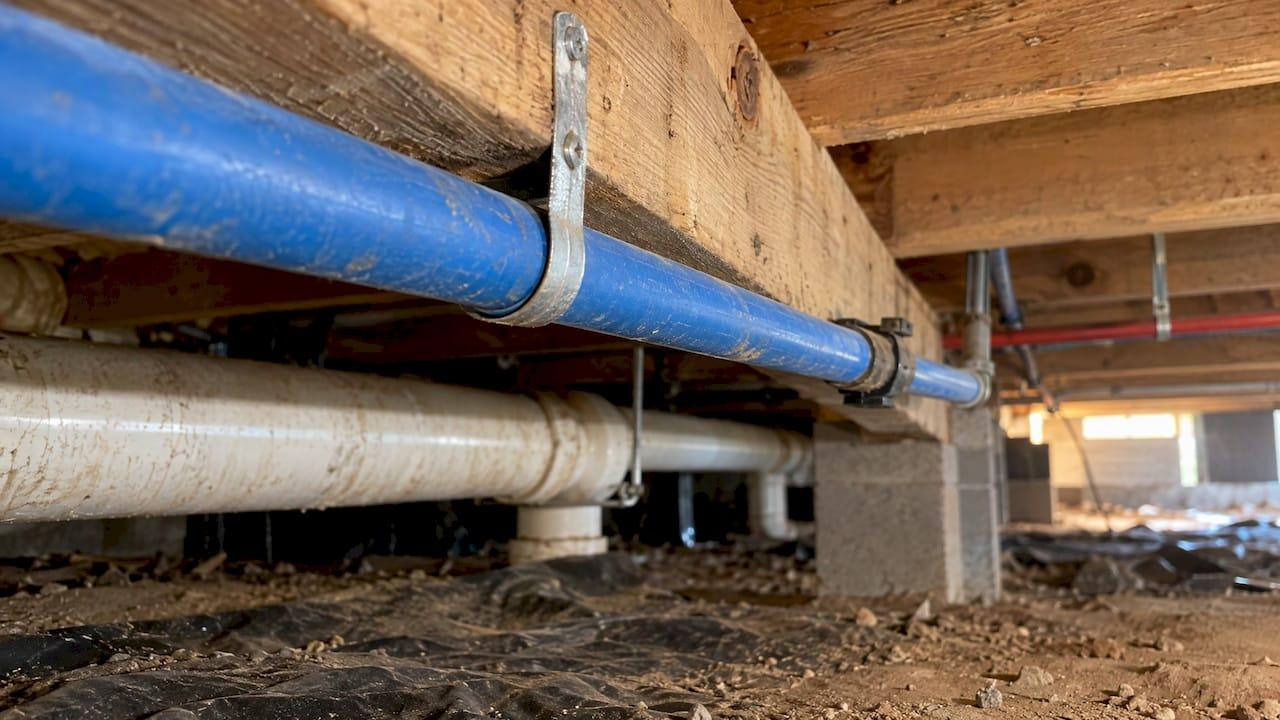
Water hammer is caused by moving water being stopped or redirected suddenly. A valve closes fast, the flow slams into it, and the shock wave rattles the pipes. The bang gets worse when water pressure is high, when the air chambers that cushion the shock have failed, or when pipes are loose in the wall. If you hear a thud every time a faucet, washing machine or dishwasher shuts off, one of those four things is almost always involved. A licensed plumber can find which one and fix it, and we do that in Rogers, AR.
TL;DR
- Water hammer is a pressure surge. It happens when flowing water is stopped suddenly, usually by a valve that closes fast.
- The common triggers: quick-closing valves, high water pressure, waterlogged or failed air chambers, worn stop valves, and loose or unsupported pipes.
- The banging can seem to come from one place and actually start somewhere else, often inside a wall.
- Fixes are usually modest: securing pipes, restoring air chambers, adding arrestors, or fitting or adjusting a pressure-reducing valve.
- Repeated surges stress joints and fittings. If the noise is new, loud or paired with a leak, have it inspected.
Table of Contents
- What water hammer actually is
- The main causes of water hammer
- Quick reference: what the noise tells you
- How to tell where it is coming from
- How water hammer is stopped
- Why it matters beyond the noise
- Who needs to pay attention
- What we do about it in Rogers
- Our view: treat the bang as a message
- FAQ
- Sources
What water hammer actually is
Water in a home's pipes has weight and speed. When you turn a tap off, you stop that moving water in a fraction of a second. The energy has nowhere to go, so it travels back through the pipe as a pressure wave. Plumbing guidance from New Zealand's Level program says water hammer generally occurs in a high-pressure system when flow is suddenly stopped, and the shock waves vibrate the pipework and make the hammering sound.
Think of it as a physical event, not a mystery noise. It is a short spike in pressure that moves through the line. Pipes flex, fittings knock against framing, and you hear a bang, a thud or a series of rapid knocks.
The sound is the symptom. The cause is always some combination of three things: how fast the water is moving, how quickly something stops it, and what is available in the system to absorb the shock.

The main causes of water hammer
1. A valve that closes too quickly
This is the classic cause. An industry overview in Valve Magazine lists a valve closing too quickly or a pump shutting down suddenly as one common cause of water hammer in piping systems.
At home, the culprits are the fixtures that shut off fast:
- Washing machine fill valves. They are solenoid valves, which snap shut electrically in an instant. The thump often comes right as the tub finishes filling.
- Dishwashers and ice makers. They use the same kind of quick-acting valve.
- Single-handle faucets. A quick flick of the lever can stop flow faster than a slow turn of an old two-handle tap.
- Toilet fill valves and outdoor spigots. Flip a hose spigot off hard and you may hear the surge in the wall.
A useful clue: if the bang happens only when one appliance stops, you are likely looking at that appliance's valve, and at whatever lacks a cushion near it.
2. Water pressure that is too high
Faster-moving water has more momentum to lose. The Level guidance notes that faster-moving water makes water hammer more likely. Pressure drives that speed.
High incoming pressure is common when a home sits low on a hill, or when the municipal supply runs high and there is no regulator, or the regulator has worn out. Plumbing codes recognize the risk. The City of Raymore, Missouri, for example, adopts the International Plumbing Code with a rule that a pressure-reducing valve must limit building water-distribution pressure to 80 psi static. Static pressure is the pressure when no water is running. Eighty psi is a common ceiling in U.S. codes, but check the rules that apply to your property.
Signs your pressure may be too high, beyond the banging:
- Faucets spray or splash harder than they should.
- Toilets run or refill with a hiss after flushing.
- Appliance hoses and supply lines wear out sooner than expected.
- The relief valve on your water heater drips.
A plumber measures this with a gauge on a hose bib. If you want to understand what a regulator involves before you call, our guide to water pressure regulator cost lays out what drives the price.
3. Air chambers that have failed or filled with water
Many homes, especially older ones, have short vertical pipe stubs behind walls near fixtures. These are air chambers. The trapped air compresses when the shock wave arrives, and it acts as a cushion.
The cushion does not last forever. Scottish Water's factsheet on noisy pipes explains that failed or waterlogged air chambers lose their ability to soften the shock, which makes water hammer more prominent. The same factsheet says draining and recharging them can restore them for a time. Over the years the trapped air is gradually absorbed or replaced by water, and the chamber stops doing its job.
This explains a common story: a house that was quiet for 15 years starts banging after a plumbing repair. When the system is drained, the air in the chambers may escape, and they refill with water. The valves and pressure did not change. The cushion did.
4. Missing or worn arrestors
A water hammer arrestor is a small sealed device, often with a piston or bladder, that absorbs pressure surges and does not rely on a plain air pocket. Model plumbing code text says that an arrestor shall be installed where quick-closing valves are used, and that arrestors conform to the ASSE 1010 standard. Code requirements vary by jurisdiction and the year of the adopted code, so a homebuilt-in-the-past house may have none at all.
If your washing machine or dishwasher is the trigger and the home has no arrestor near it, that missing device is the cause in practice.
5. Worn stop valves and loose internals
The small shutoff valves under sinks and behind toilets can wear. Loose gland packing or worn washers can let the valve parts chatter when water flows past, which produces knocking and vibration. This is a different noise than a clean single bang. It is more of a stutter or rattle that starts with the flow rather than at shutoff. A worn faucet cartridge can do something similar. If a faucet is also dripping, our page on faucet repair and installation in Rogers covers that work.
6. Loose or unsupported pipes
Loose pipes do not create the pressure surge, but they make it audible. The Level guidance says loose or inadequately secured pipes can move and vibrate, making the hammering louder. A pipe that is free to jump against a stud, a joist or a masonry wall will knock with each surge.
This is why a minor surge can sound like someone swinging a hammer inside the wall. It is also why two homes with the same pressure can sound very different.
7. Pumps stopping suddenly
In homes with well systems, booster pumps or sump and ejector lines, a pump that shuts off abruptly can send the same type of surge through its discharge line. If a check valve slams shut when the pump stops, you hear it. This is more common in commercial buildings, multi-story properties and houses on well water than in a typical city-supplied house.
8. Thermal and flow changes
Not every bang is water hammer. Pipes also tick and creak as hot water expands them, which is a slower noise and tends to follow heating cycles. A whistling or shrieking sound usually points to a restriction or a worn washer rather than hammer. Learning the difference saves you from chasing the wrong problem.
Quick reference: what the noise tells you
| What you hear | When it happens | Most likely cause |
|---|---|---|
| One sharp bang | Right as a washer or dishwasher stops filling | Quick-closing solenoid valve, no working cushion |
| Thud on every faucet shutoff | Any fixture, any time | High pressure or failed air chambers |
| Loud knocking that seems to wander | During or after flow | Loose pipes touching framing |
| Rattle or chatter | While water runs | Worn stop valve or faucet internals |
| Slow ticking | As water heats or cools | Pipe expansion, not water hammer |
| Bang after recent plumbing work | First uses after repair | Air chambers drained and waterlogged |
How to tell where it is coming from
Sound misleads. The bang often seems to come from the faucet you just closed, but the source may be an unsecured pipe in a wall cavity some distance away, or an air chamber behind a different fixture. A few steps narrow it down without opening anything:
- Note which fixture triggers it. Run each faucet, then each appliance, and write down when the bang occurs.
- Note whether it is on opening or closing. Hammer is a shutoff event. Noise on opening points to loose parts or restrictions.
- Try hot and cold separately. If it only happens on one line, you have narrowed the section of pipe.
- Check for pipes touching finished surfaces. Exposed lines in a basement, crawl space or garage that rest on framing or masonry are prime suspects.
- Notice the time of day. Municipal pressure often rises overnight when demand is low, so a house may bang more in the early morning.
If the pipes are hidden, the quickest route is a professional look. For a house where the noise has no obvious source, a plumbing video camera inspection lets a technician see inside lines without tearing out drywall.
How water hammer is stopped
The fix follows the cause. Each of these is a routine job for a licensed plumber:
- Secure the pipes. Proper straps, clips and supports keep lines from slapping the structure. The Level guidance recommends fixing loose pipes with support and avoiding direct contact with the building structure so vibration is not amplified.
- Recharge or replace air chambers. Draining the system correctly can restore air chambers for a time. Where they have failed for good, an arrestor is the longer-lasting replacement.
- Install arrestors. Place them close to the quick-closing valve, such as at a washer box or dishwasher supply.
- Fit or adjust a pressure-reducing valve. This Old House notes that where high pressure contributes, installing or adjusting a PRV brings pressure to a safe level. The same page puts the cost of installing one at about $150 to $300, and that figure is a national estimate. A job that involves access problems, a main-line location or a larger replacement can run higher.
- Replace worn stop valves and faucet parts. Cheap parts, quick job.
If you are wondering whether water hammer goes away on its own, it usually does not. A new washer, a drained system or a pressure change can make it quieter or louder, but the conditions behind it stay until someone corrects them.
Why it matters beyond the noise
A surge is not just a sound. Each spike pushes against joints, fittings, supply hoses and valve seats. Over time, that stress can contribute to weeping fittings and failed connections. A pinhole leak behind a wall can grow quietly. If you ever find yourself dealing with water where it does not belong, our guide on what to do about a burst pipe walks through shutting off the water and protecting the house, and our look at burst pipe repair cost shows what an avoidable failure can cost.
Shut off your main water valve and call a plumber right away if the banging comes with any of these:
- Water stains, damp drywall or a musty smell near the noisy wall
- A sudden drop in water pressure
- A water meter that keeps turning when every fixture is off
- A pipe that visibly jumps or a fitting that is dripping
Hidden leaks are the one thing worth acting on at once. Our leak detection and repair service in Rogers is built for exactly that situation.
Who needs to pay attention
Homeowners. A bang that began recently is worth tracing. Check what changed: new appliance, plumbing work, a new regulator or a seasonal pressure shift.
First-time homebuyers. Banging pipes during a showing, or a home inspector's note about high pressure or unsecured piping, is a point to raise before closing. Pressure and pipe support are simple to check and inexpensive compared to what they can prevent.
Property managers. Tenants report noise long before they report leaks. A surge on a shared riser or a washer room can affect several units. Documenting which fixtures knock helps a plumber work faster.
Businesses. Commercial buildings have longer runs, larger valves and more pumps. Flushometer valves, dishwashers, ice machines and booster pumps are frequent triggers, and the stakes of a failed fitting are higher when the building is open.
Renovators. New bathrooms and kitchens add quick-closing fixtures and appliances. Plan arrestors, proper pipe support and pressure checks into the rough-in so the new space is quiet from the first day.

What we do about it in Rogers
We are JoCo Plumbing, a licensed plumbing company serving Rogers, AR and surrounding areas. Our site describes our approach as rapid response, transparent pricing and clear communication. For water hammer, the work usually falls under services we already list: leak detection and repair, plumbing video camera inspection, faucet repair and installation, and pump installation and repair.
If pipes are banging and you cannot tell why, book a plumber through our main site and describe when the noise happens. If it is paired with water damage or a sudden loss of pressure, use our emergency plumbing repair page instead.

If the noise started after a pump change or you run a well or booster system, our pump installation and repair page lists what we handle for sump, booster and well pumps.
Our view: treat the bang as a message
Most people hear water hammer and decide to live with it. We understand why. The house still works. The water still runs.
We would not leave it. A pipe that bangs is a pipe under repeated stress, and the cause is rarely random. It is a fast valve, high pressure, a tired air chamber or a loose strap. Each of those is a clear, fixable thing.
Our approach is to find the cause first and quote the work in plain terms. Start with pressure, because it affects every other cause. Then look at the supports and the cushions. Where pipes are hidden, a camera inspection saves opening walls. We would rather spend an hour finding the real source than replace parts that were never the problem.
If you are buying, renovating or managing a property, ask about this before it becomes a repair. Quiet pipes are a sign the system is in balance.
Jonathan
FAQ
What causes water hammer in a house?
The main cause is flowing water being stopped suddenly, usually by a quick-closing valve in a washer, dishwasher or faucet. High water pressure, failed air chambers and loose pipes make it worse. Often more than one of these is present at once.
Can water hammer damage pipes?
It can. The repeated pressure spikes stress joints, fittings, valves and appliance hoses, and a weakened connection may start to leak. A leak hidden in a wall can run unnoticed, so a new or growing bang deserves an inspection.
Can water hammer go away on its own?
Usually not. It may change after a repair or a seasonal pressure shift, but the cause stays in the system. Securing pipes, restoring or adding arrestors and correcting pressure are the lasting fixes.
How do I know where the water hammer is coming from?
Note which fixture or appliance triggers the bang and whether it happens at shutoff. Then check exposed pipes for loose spots. The sound can seem to come from the faucet while the source is a loose pipe inside a wall, so a plumber's inspection is the reliable way to confirm it.
Is water hammer expensive to fix?
It depends on the cause. Installing a pressure-reducing valve is estimated at about $150 to $300 by This Old House. Securing pipes or adding an arrestor is typically smaller work, while pipes hidden in walls take more time to reach. A plumber can quote it once the cause is found.
Sources
- Water hammers and air locks in water supply pipework (Level, New Zealand)
- Water hammers and air locks in water supply pipework, water speed (Level)
- Noise in pipes factsheet (Scottish Water)
- Water Hammer in Piping Systems (Valve Magazine)
- Article VI: International Plumbing Code (City of Raymore)
- Water hammer, plumbing code section P2903.5 (UpCodes)
- How to Install a Water Pressure Reducing Valve (This Old House)