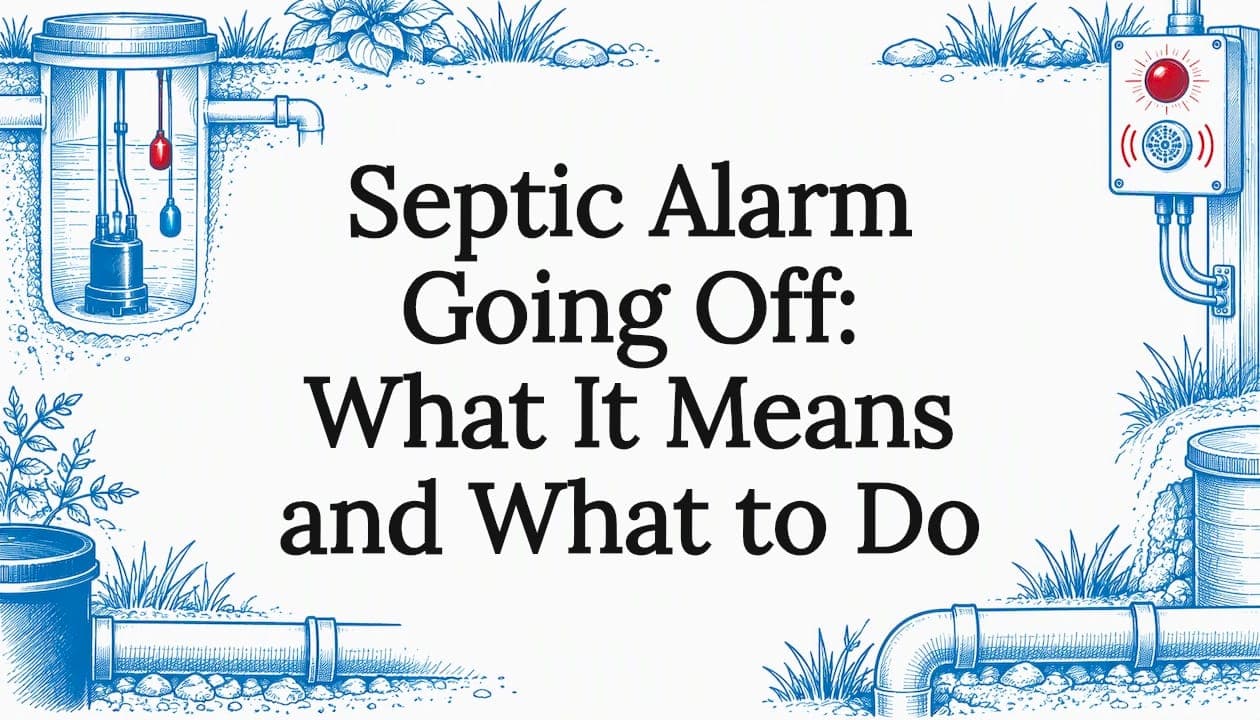
A septic alarm going off means the water level in your pump tank has risen above the safe limit. Sometimes the cause is simple, like a tripped breaker. Sometimes the pump or a float switch has failed. Either way, the alarm is a warning, not yet a failure. Cut your water use now, check the breaker, and call a licensed plumber if the alarm returns after a reset.
This guide covers what the alarm is telling you, the safe checks you can do yourself, the mistakes that make things worse, and when to book a plumber.
TL;DR
- A high-water alarm means effluent in the pump tank has passed its safe level. The Missouri health department calls it an urgent warning, not an immediate system failure.
- Silence the alarm, then stop laundry, dishwasher use and long showers right away.
- Check the breaker panel first. A tripped pump breaker with a still-powered alarm is a common, easy-to-miss cause.
- Never open or enter the pump chamber. The gases can be fatal.
- If the alarm comes back after a reset, treat it as an active emergency and call a licensed plumber.
Table of Contents
- What the Alarm Is Telling You
- Why a Septic Alarm Goes Off
- What to Do in the First Hour
- What Not to Do
- Why the Alarm Goes Off After Heavy Rain
- Aerobic Systems and Air Pump Alarms
- Our Perspective: Why Alarms Get Ignored
- Who to Call and What to Expect
- Preventing the Next Alarm
- FAQ
- Sources
What the Alarm Is Telling You
Most septic alarms are tied to a pump tank, also called a pump chamber. This is a concrete, fiberglass or polyethylene container that collects treated liquid from the septic tank. Inside are a pump, control floats that switch the pump on and off, and a separate high-water alarm float, as described in Snohomish County's guide to pump chambers.
When the pump works, liquid rises to the dosing level, the pump runs, and the level drops. If liquid keeps rising past that point, the alarm float lifts and trips the alarm. That is the whole signal: water is coming in faster than it is going out.

The state of Missouri's owner manual says a high-water alarm usually points to a pump malfunction. It can also come from float switch failures, clogged pressure lines or excessive water use in the house (Missouri DHSS, Chapter 6).
Reading the panel
The alarm panel is usually mounted on the house, a garage wall or a post near the tank. Most have a light and a buzzer, plus a silence or reset button. Panels differ by brand, so check the label or your owner's manual. A common pattern is a green light for power on and a red light for an alarm condition. Aerobic systems, which use an air pump, can alarm for low air pressure too. If your panel looks different from what is described here, the manual or your installer's paperwork is the right reference.

Why a Septic Alarm Goes Off
There are five common causes. They run from harmless to serious.
1. Too much water at once
Several loads of laundry, a dishwasher cycle, a long shower and a running toilet can overwhelm a pump tank in a few hours. If the alarm sounded during a heavy water day and the pump is working, the level may drop on its own once you stop using water.
2. A tripped breaker or power problem
The alarm circuit should be electrically separate from the pump circuit. That means the pump can lose power while the alarm keeps working. Snohomish County's guide notes that a tripped pump breaker with a powered alarm is a frequent and easily overlooked cause. A power outage can do the same. Also check whether someone switched off a wall or panel switch.
3. A stuck, tangled or failed float
Floats can tangle with the pump cord or debris. A float that sticks low never tells the pump to run. A float that sticks high can set off the alarm without a real problem. Either way, a plumber should test it, because floats live inside the tank.
4. A failed pump or clogged discharge line
Pumps wear out. Pressure lines can clog. When the pump cannot move liquid out, the tank fills until the alarm trips. This is the most common reason an alarm returns right after a reset.
5. Saturated soil after heavy rain
Heavy rain or flooding can saturate the drainfield so it cannot absorb wastewater. NDSU Extension explains that this makes water back up into the septic tank and then into your fixtures. If your alarm sounds during or after a storm, wet soil is a likely suspect. Northwest Arkansas gets its share of heavy spring and fall storms, so this one is worth keeping in mind in Rogers and nearby towns.
| Likely cause | What you may notice | Safe first move | Who fixes it |
|---|---|---|---|
| Heavy water use | Alarm after laundry or guests | Stop using water, wait | You, then confirm |
| Tripped breaker | Alarm on, pump silent | Check panel, reset once | Plumber if it trips again |
| Float problem | Alarm with normal water use | Reduce water, call | Licensed plumber |
| Pump or line failure | Alarm returns after reset | Reduce water, call | Licensed plumber |
| Saturated drainfield | Alarm after heavy rain, slow drains | Cut water use sharply | Plumber if it persists |
What to Do in the First Hour
Work through these steps in order.
- Silence the alarm. Press the silence button on the panel. This stops the noise only. It does not fix anything. Experts say silence is not a repair, and an alarm that re-triggers after a reset should be treated as an active emergency.
- Cut water use. Stop laundry and the dishwasher. Skip baths and long showers. Limit toilet flushes. Do not run water to "test" the system.
- Check the breaker panel. Look for a tripped breaker on the pump circuit. If you find one, flip it fully off, then on once. If it trips again, stop and call a plumber. Repeated resetting of a breaker that keeps tripping is a safety risk.
- Check for simple power issues. Make sure the pump is plugged in where it has an accessible outlet and that no switch was turned off. Snohomish County's guidance says to disconnect power at the breaker before any check near the pump or floats.
- Watch the panel. If the light clears and stays clear, keep water use low for a day and watch for slow drains or odors. If the alarm returns, call.
Call right away, without waiting, if you see sewage in a tub or toilet, wet or soggy ground over the tank or drainfield, or a strong sewage smell. These match the standard warning signs of a failing system: backups, slow drains, gurgling pipes, odors and lush, soggy grass over the drainfield. Our guide to septic backup signs walks through what each one looks like.
What Not to Do
Do not enter or open the pump chamber
The gases inside are toxic and the air can lack oxygen. Snohomish County's guidance says no one should enter a pump chamber under any circumstances, and that service on these electrical components belongs to a licensed professional. Pump chambers also combine water and electricity. Leave the lid alone.
Do not pump the tank as a quick fix
If the cause is a flooded drainfield, pumping is the wrong move. NDSU Extension says it gives at best three or four days of relief, and an emptied tank can even float out of the ground and damage the inlet and outlet pipes (NDSU). Reduce indoor water use instead and let the soil recover. Pumping is for routine maintenance, and our article on how often to pump a septic tank covers that schedule.
Do not keep resetting and ignoring
The alarm is your early warning before a backup. If it keeps coming back, the cause is still there.
Do not add chemicals or additives to "fix" it
A septic system is a biological treatment process. The EPA says household chemicals, large amounts of cleaning products and excess fats, oils and grease can harm the bacteria the system relies on. Pouring something in will not clear a float or pump fault.
Why the Alarm Goes Off After Heavy Rain
This is one of the top questions people ask. When the ground is waterlogged, the drainfield has nowhere to send treated water. Liquid backs up, the tank level rises, and the high-water alarm trips. Sometimes groundwater or stormwater also gets into a pump tank with a damaged lid or cracked riser.
What to do during a wet spell:
- Limit flushes and spread laundry across several days, or use a laundromat until the ground dries.
- Skip the dishwasher and take short showers.
- Keep roof gutters and downspouts pointed away from the tank and drainfield.
- Do not drive or park on the drainfield.
The University of Florida's storm guidance and West Virginia University's first aid for a flooded septic system both stress that saturated drainfields cannot treat wastewater properly, so cutting water use is the main response. If the alarm persists after the ground dries, the pump or floats likely need testing.
Aerobic Systems and Air Pump Alarms
Some homes have an aerobic treatment unit, which uses an air pump to add oxygen. These systems can alarm for high water or for low air pressure. A red light and buzzer on an aerobic unit may mean the compressor has failed, the air line is cracked or a diffuser has clogged. Do the same first steps: silence, cut water use, check the breaker. Then call a plumber, since aerobic units rely on air to keep the treatment working. Check your owner's manual for whether your system is aerobic. If you do not have records, the county health unit may have your permit on file. The Arkansas Department of Health says you can call the health unit in your county and ask for the Onsite Environmental Specialist to get a copy of your septic permit.
Our Perspective: Why Alarms Get Ignored
We see the same pattern on septic calls. The alarm sounds, someone presses the button, the noise stops, and life goes on. A week later the toilets back up on a Saturday night. The alarm was right the first time.
Here is how we think about it:
- The alarm is cheap insurance. A pump or float repair costs far less than cleanup from a sewage backup in the house.
- Tell the plumber what you saw. When did it sound? Was it raining? Did the light stay red? What had been running? Those answers often point straight to the fault.
- Do not guess at electrical work. Pump tanks mix water, power and toxic gas. Testing floats and pumps takes proper tools and licensed hands.
- Treat a repeat alarm as an emergency. One alarm after a big laundry day may be water use. A second alarm after you cut back is a fault.
Our goal on these calls is to find the cause, explain it plainly and give you the options. We are licensed, we focus on rapid response, and we aim for clear communication before work starts.
— Jonathan
Who to Call and What to Expect
If the alarm returns, or you see any backup sign, call a licensed plumber who works on pumps and septic components. A plumber will typically look at the panel, test the floats and pump, check the discharge line and look at what the water level tells them about the drainfield. If the problem is a failed pump or float, replacement is usually straightforward. If the drainfield or a line is the problem, the repair is bigger, and a camera inspection of the line can show what is happening.
Our septic and pump service in Rogers, AR
JoCo Plumbing handles emergency plumbing repairs, pump installation and repair (including sump, grinder, ejector, lift station and well pumps) and septic services in Rogers and surrounding areas. If your alarm keeps sounding, start with our emergency plumbing repairs page and request a visit. For pump work, see our pump installation and repair services. If a line problem is suspected, a plumbing video camera inspection can show the pipe's condition without guessing. We do not publish set prices for these jobs, so call for a quote before work begins.
Preventing the Next Alarm
- Space out water use. Spread laundry over the week rather than doing every load on one day.
- Fix leaks. A running toilet can add hundreds of gallons a day to the system. Our leak detection and repair service can find hidden ones.
- Flush only toilet paper and waste. Keep wipes, grease and chemicals out of drains.
- Test the alarm. Many panels have a test button. Check your manual and press it a couple of times a year.
- Inspect on schedule. The EPA recommends professional inspection at least every three years for typical systems, with pumping as the inspector advises, generally every three to five years. Systems with electrical floats, pumps or other mechanical parts need their alarms inspected as well, according to Montana DEQ's homeowner guide. Our guide to septic inspection costs explains what a visit involves.
- Know your system. Keep the permit, tank location and pump model on file.
If you are weighing a bigger fix, such as a failed system, see our article on septic replacement costs for Rogers homes. Homes with a basement may also have a sewage ejector pump, which has its own warning signs, covered in sewage ejector pump problems.
FAQ
What does a septic alarm mean?
It means the liquid level in your pump tank has passed a set limit. The cause may be heavy water use, a tripped breaker, a float problem, a failed pump or saturated soil. Treat it as urgent but not yet a failure, and reduce water use right away.
Is a septic high water alarm an emergency?
It is urgent. If the alarm stops after you cut water use and stays quiet, you have some time to book a visit. If it returns, or you see backups, odors or wet ground, call a licensed plumber the same day.
Can I reset the septic alarm myself?
You can press the silence button, and you can reset a tripped breaker once after disconnecting power safely. That only quiets the warning. If the alarm sounds again, the underlying problem remains and needs a professional.
Why is my septic alarm going off after heavy rain?
Saturated soil cannot absorb wastewater from the drainfield, so water backs up toward the tank. Cut indoor water use sharply and do not have the tank pumped as a fix. If the alarm continues once the ground dries, have the pump and floats tested.
Can I go into the tank to check it?
No. The gases in a pump chamber are toxic and the lack of oxygen can be fatal. Leave all work inside the chamber to a licensed professional.
Sources
- Chapter 6: Pumps and Pump Tanks, Missouri DHSS
- Caring for Your Septic Pump Chamber, Snohomish County
- Flooding and Septic Systems, NDSU Agriculture
- Troubleshooting, University of Minnesota Onsite Sewage Treatment Program
- Resolving Septic System Malfunctions, EPA
- First Aid for a Flooded Septic System, West Virginia University
- Onsite Wastewater FAQs, Arkansas Department of Health
- Homeowner's Guide to Septic Systems, EPA
- A Montana Homeowner's Guide to Septic Systems, Montana DEQ