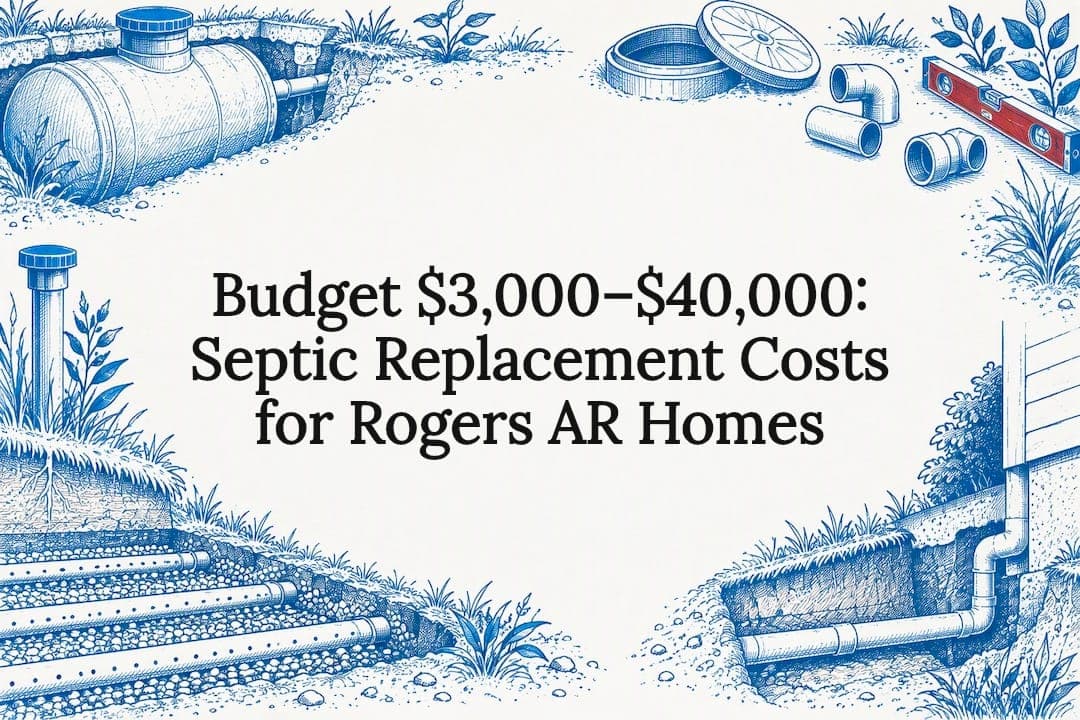
Tank-only replacement typically runs $3,000 to $7,000. A drainfield replacement adds several thousand to over twenty thousand dollars. A full system replacement, tank and drainfield together, commonly lands between $10,000 and $40,000 or higher, depending on soil conditions, permits, and site access. Where you fall in that range depends on a few specific cost drivers, which we break down below.
TL;DR:
- Replacing only the tank typically costs between $3,000 and $7,000 if the drainfield remains functional.
- Full system replacements on challenging sites with poor soil can exceed $25,000 to $40,000, driven by site conditions and system type.
- Soil permeability and site access are the primary factors affecting costs, with engineered solutions often needed for poor or constrained sites.
- Routine maintenance, such as pumping every 3 to 5 years, can significantly extend system lifespan and avoid costly emergency replacements.
- Securing multiple bids, proper soil testing, and exploring local assistance programs are crucial steps to managing repair expenses.
Table of Contents
- Detailed cost breakdown: tanks, drainfields, full systems and common add-ons
- Major cost drivers: soil/percolation, system type, site access, and local code
- Tank-only vs. partial vs. full replacement: which one applies to you
- Permits, inspections, timeline, and hidden costs to budget for
- How to pay for a replacement and programs that can help
- Maintenance, lifespan, and a homeowner checklist to avoid emergency replacement
- Publisher perspective on getting quotes and what to expect from installers
- How JoCo Plumbing can help with inspections, quotes, and septic replacement
- FAQ
- Sources
Detailed cost breakdown: tanks, drainfields, full systems and common add-ons
A septic quote is built from several line items, not one flat number. Knowing each piece helps you read a bid and spot what might be missing.
- Tank: concrete, plastic, or fiberglass, sized to your household, usually a few hundred to a couple thousand dollars for the tank itself.
- Excavation and labor: digging out the old tank and setting the new one, often $1,500 to $4,000.
- Risers and inspection ports: raise access to grade for easier future service, typically a few hundred dollars.
- Drainfield materials and installation: pipe, gravel or chambers, and labor, the biggest swing item in a full replacement.
- Distribution box and pumps: needed for pressure-dosed or sloped sites, adding $500 to $2,500.
- Hauling, disposal, and landscaping restoration: removing old materials and reseeding or repaving disturbed ground.
Three realistic scenarios show how these add up. A tank-only swap with an intact, healthy drainfield often totals several thousand dollars. Replacing a failed drainfield on a simple, flat site with good soil tends to run several thousand to over ten thousand dollars. A full replacement on a challenging site with poor percolation or tight access can reach $25,000 to $40,000 or more.
Maintenance changes these numbers substantially. Routine pumping every 3 to 5 years typically costs a few hundred dollars, a small fraction of what emergency replacement costs when neglect leads to drainfield failure. Staying on schedule is one of the most reliable ways to avoid the high end of these ranges entirely.
Major cost drivers: soil/percolation, system type, site access, and local code
Soil quality decides more of your final bill than almost anything else. A percolation and soil-site review measures how well your ground absorbs wastewater, and poor permeability or shallow bedrock often forces an engineered alternative instead of a standard gravity system.
- Gravity systems are the least expensive when soil and slope allow them.
- Pressure-dosed systems add a pump and controls for sites with uneven grade.
- Aerobic treatment units cost more upfront but handle smaller lots or sensitive soils.
- Tank material matters too: concrete tends to cost more than plastic but often lasts longer; fiberglass sits in between.
Tight access for equipment, high groundwater, steep slopes, or long distances from the house to the drainfield all add labor and equipment costs. Some counties also require nitrogen-reducing components or a licensed engineer's design for any site near wells, waterways, or shorelines, which adds both time and expense.
Pro Tip: Ask your installer for the percolation test results before accepting a quote. The test, not the contractor's guess, determines which system type you're legally allowed to install.
Tank-only vs. partial vs. full replacement: which one applies to you
Not every septic problem requires tearing out the whole system. When the drainfield still absorbs water properly, swapping only the tank can save thousands compared with a full rebuild.
Signs that point toward a full replacement instead include standing water or sewage odor near the drainfield, consistently slow drains throughout the house even after pumping, and lush, soggy patches of grass over the leach lines. These symptoms usually mean the field itself has failed, not just the tank.
A contractor typically confirms scope through a short sequence:
- Pump and inspect the tank for cracks, corrosion, or baffle failure.
- Run a camera inspection through the outlet pipe toward the drainfield.
- Check for surface signs of drainfield saturation or failure.
- Test soil conditions if a new field may be needed.
Permits, inspections, timeline, and hidden costs to budget for
Most jurisdictions require a permit before any septic work begins, and a site evaluation or percolation test is often part of that process. If an inspection during a real estate transaction reveals the system no longer meets current code, you may need an engineered design, which adds both cost and review time.
Budget for a few line items that rarely show up on the first estimate:
- Inspection and testing fees, including the percolation test and any required camera inspection.
- Utility locates before excavation begins.
- Electrical work if your system needs a new pump or control panel.
- Erosion control and restoring landscaping, driveways, or walkways disturbed during the dig.
From initial site evaluation to final permit sign-off, a typical project takes a few weeks to a couple of months, longer if an engineered design or county review is required.
How to pay for a replacement and programs that can help
A septic replacement is a large, unplanned expense for most households, but you have more options than paying cash upfront.
- Home equity loans or personal loans are the most common routes for homeowners without savings set aside.
- USDA rural development loans support septic repairs and replacements in eligible rural areas.
- State and regional assistance programs, such as SERCAP low-rate loans and bay restoration grants, can cover part or all of the cost for qualifying households.
- County health departments often maintain lists of local grant or loan programs tied to income or environmental priority areas.
If you plan to apply for assistance, document the failure with photos, inspection reports, and camera footage before work begins. Programs often require proof of failure, and timing matters if a sale or refinance is involved.
Maintenance, lifespan, and a homeowner checklist to avoid emergency replacement
A well-maintained septic system can last 25 to 30 years or more, while a neglected one can fail in half that time. The EPA recommends inspecting your system every 1 to 3 years and pumping the tank every 3 to 5 years, a routine that costs far less than even a tank-only replacement.

Watch for slow drains, gurgling pipes, or sewage odor indoors or outdoors. These often mean a repair will solve the problem, not a full replacement, especially when caught early.
A simple maintenance checklist keeps most systems out of emergency territory:
- Schedule pumping every 3 to 5 years and keep the receipts.
- Avoid flushing wipes, grease, or chemicals that disrupt the tank's bacteria.
- Keep heavy equipment and deep-rooted trees away from the drainfield.
- Request a camera inspection if drains slow down or odors appear.
Pro Tip: Keep a folder of every inspection and pumping record. It speeds up grant applications and gives future buyers confidence during a home sale.
Publisher perspective on getting quotes and what to expect from installers
Get at least two or three written bids before committing. Each should spell out what's included, what's excluded, and a realistic timeline, not just a bottom-line number. Confirm the installer is licensed and insured, and ask how they determined your system type. We've found that contractors who insist on a real soil test and camera inspection before quoting, rather than guessing, tend to deliver estimates that hold up once the ground is open.
— Jonathan
How JoCo Plumbing can help with inspections, quotes, and septic replacement
If you're facing a failing drainfield or an aging tank, we offer straightforward septic tank installation in Rogers, AR, with site evaluations that account for Arkansas permitting requirements from the start.

On a site visit, we inspect the tank and drainfield, walk you through what's failing and why, and put together a transparent estimate before any work begins. If a full septic-to-sewer conversion makes more sense for your property, we'll walk you through that option too. We ensure clear pricing to avoid surprise line items once the excavation starts.
Ready to find out what your replacement will actually cost? Request a quote or schedule a service visit and we'll get a technician out to assess your system.
FAQ
How much does it cost to replace an existing septic tank?
Replacing just the tank, when the drainfield is still working, typically costs $3,000 to $7,000. If the drainfield also needs replacement, total project costs often reach $10,000 to $40,000 or more depending on soil conditions and site access.
How long do septic tanks usually last?
A septic tank can last several decades or longer with regular maintenance. Routine inspection every 1 to 3 years and pumping every 3 to 5 years is the main factor that extends a system's working life and avoids early failure.
Can you replace just a septic tank?
Yes, when the drainfield still absorbs wastewater properly, a tank-only swap is common and saves significant money compared with a full system replacement. A camera inspection and soil check confirm whether the field is still viable before deciding scope.
How much is a septic tank for a 2,000-square-foot house?
Tank size depends on bedroom count and expected water use more than square footage alone, but a household that size often needs a tank sized to fit those needs. Installed cost for a tank with an existing functional drainfield generally falls in the several-thousand-dollar range.
Sources
- Why maintain your septic system | US EPA
- On-Lot Septic System Inspections During Real Estate Transactions | Penn State Extension
- Financial resources - Septics | University of Maryland Extension
- Before you build your home: conduct a soil site review | WVU Extension