
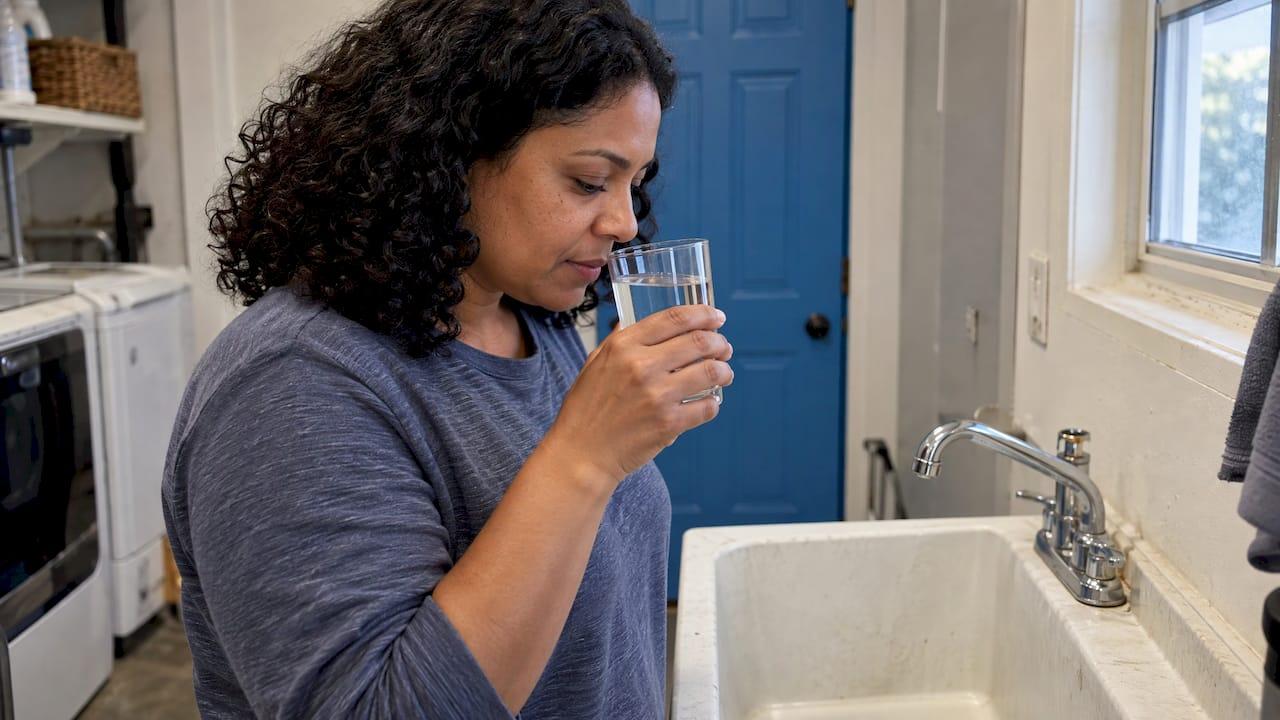
Water that smells like rotten eggs almost always contains hydrogen sulfide gas, or bacteria that produce it. If the smell shows up only on the hot side, the water heater is the likely source. If it shows up on both hot and cold, the water supply or a drain is more likely. A two-minute test at the sink will tell you which.
This guide shows how to find the source, when the smell is a safety issue and what the fix looks like in each case.
TL;DR
- Hydrogen sulfide gas gives water a rotten egg odor. It can come from groundwater, sulfur bacteria, a drain or the water heater.
- Hot water only: suspect the water heater. A reaction involving the magnesium anode rod is a common cause, and a licensed plumber can swap the rod.
- Smell at one sink only: fill a glass, carry it away from the sink and sniff. If the glass is odor-free, the drain is the likely source.
- The odor usually does not mean the water is unsafe, but the gas can build up in enclosed spaces. Private well owners should also test for coliform bacteria and nitrate.
- Call a plumber when the smell is in the air, keeps returning after a flush, or points to the heater, drains or sewer line.
Table of Contents
- What causes the rotten egg smell
- Find the source in 10 minutes
- Why the smell is only in hot water
- When the smell is in both hot and cold water
- When only one drain smells
- Is sulfur-smelling water safe?
- How to test the water
- How the smell is fixed
- What to expect from a plumber visit
- Our perspective
- Get the smell checked in Rogers
- FAQ
- Sources
What causes the rotten egg smell
Hydrogen sulfide (H2S) gives water a characteristic rotten egg odor and taste, according to the Minnesota Department of Health. That page notes it can occur naturally in groundwater, or be produced by sulfur bacteria in groundwater, wells, plumbing systems or water heaters. It can also result from reactions involving sulfates and the water heater anode rod.
For private wells, the Connecticut Department of Public Health explains that the gas is produced naturally by decomposing organic material and by sulfur-reducing bacteria, which convert naturally occurring sulfates in the water.
So there are four common places the smell starts:
- The water source. Groundwater or well water carries hydrogen sulfide into the house.
- The water heater. Bacteria or an anode rod reaction produce the gas only in hot water.
- A drain. Bacteria growing in the drain create sewage-like or sulfur odors that seem to come from the water.
- A sewer or venting problem. Sewer gas gets into the room through a dry trap, a failing seal or a damaged line.
Each one has a different fix, so finding the source comes before any treatment.
Find the source in 10 minutes
You do not need tools. You need a few faucets and a clean glass.
Step 1: Compare hot and cold
The Minnesota Department of Health suggests checking after you have been away from home for a few hours. Run the cold water at a sink and smell it. Then run the hot water and smell that. Repeat at a second sink or the shower.
- Only hot water smells: the water heater is the likely cause.
- Both hot and cold smell: the source is probably the water supply or, for well homes, the well and the plumbing.
- Only one faucet smells: the fixture or its drain is the problem.
The shower can seem worse than the sink. Per the Connecticut health department, hydrogen sulfide is more noticeable in the shower because the gas is released into the air when water is heated.
Step 2: Do the glass test
The University of Georgia's CAES Field Report says bacteria growing in the drain is the most common cause of rotten egg or sewage-like odors. Its test is simple:
- Fill a glass with water from the smelly sink.
- Carry it to another room, away from the sink.
- Swirl and smell it.
If the water in the glass has no odor, the drain is the likely source. If the glass smells, the odor is in the water itself.
Step 3: Note when it happens
Write down the pattern. Does the smell appear after a vacation? After the heater has been off? Only first thing in the morning? Patterns help a plumber narrow the cause quickly, and they matter for the water heater, as the next section shows.
Why the smell is only in hot water
Odor from only the hot side commonly points to the water heater. Two causes come up most often.
Bacteria in the tank. CAES says bacteria in a water heater can cause rotten egg or sewage-like odors when hot water goes unused, when the heater has been off for a significant period, or when the thermostat is set too low. A home that sat empty for a week, or a guest bathroom heater rarely used, fits this pattern.
The anode rod. A tank heater has a rod inside that protects the steel tank from corrosion. The Connecticut health department describes a chemical reaction involving a magnesium rod as one explanation for hot-water-only odor. Its guidance: replacing the magnesium rod with an aluminum or zinc rod may resolve the issue. If water temperatures are kept above 150°F, use only an aluminum rod. CAES also says a licensed plumber can replace a magnesium rod with an acceptable alternative such as aluminum.

Those sources describe the rod swap as something that may resolve the problem, not a guarantee, and neither gives a timeline. If the odor persists, the plumber looks at the tank condition, the thermostat setting and the incoming water.
The same smell logic applies to other household odors. If you are not sure whether what you smell is sulfur from the water or sewer gas from a drain, this guide on the causes of sewer smell in a house helps you tell them apart.
If the heater is also underperforming, leaking or old, see our related guides on water heaters not heating and what a leaking water heater means. When a tank is near the end of its life, replacement can solve the odor and the other problems at once. Our water heater replacement cost guide includes a checklist for comparing quotes.
When the smell is in both hot and cold water
If every faucet smells, the sulfur is arriving with the water or developing in the plumbing.
- Private well: natural hydrogen sulfide and sulfur-reducing bacteria are common causes. The water may also tarnish silverware and discolor copper and brass. The Connecticut health department says higher levels can tarnish copper pipes and fixtures too.
- Plumbing and fixtures: bacterial growth inside older pipes or a neglected branch line can add odor.
- A pump or pressure system: on well homes, the well pump and tank are part of the path. Our pump installation and repair team handles well, booster and sump pumps.
When the odor is constant, a water test is the next step. See the testing section below.
When only one drain smells
A smell at one sink or tub that fails the glass test is a drain problem, not a water problem. Organic deposits in drains feed bacteria, as CAES notes, and the odor rises as you run water.
What helps:
- Run water in rarely used drains so the trap seals.
- Clean the fixture overflow and drain opening.
- If the smell returns, the buildup is deeper in the line. Professional drain cleaning or hydro jetting clears the line wall to wall.
If several drains smell, gurgle or back up, the problem may be in the main line. A camera inspection shows what is happening inside the pipe. Our floor drain backup guide explains what to do and who to call.
Is sulfur-smelling water safe?
In most cases, the odor does not mean the water is unsafe. The Minnesota Department of Health states that in the US the rotten egg odor does not in most cases indicate unsafe water or poor overall water quality. The Vermont Department of Health adds that sulfur bacteria are not harmful.
There are two cautions worth following.
The gas can collect in enclosed spaces. Vermont's guidance says hydrogen sulfide gas in the air can be hazardous at high levels, and it advises removing the gas from the water or venting it outside so it does not collect in low-lying or enclosed spaces. The University of Nebraska–Lincoln extension publication says hydrogen sulfide is flammable and poisonous. Household concentrations are usually not a health risk, but in a confined area such as a shower, levels can reach a point that causes nausea and illness. If you feel sick while showering, ventilate the room, get out of the space and have the source found.
Rarely, the cause is pollution. Sewage or other contamination can be behind the smell. Because odor does not track sanitary quality, Minnesota advises well owners to test for coliform bacteria and nitrate to be safe.
One more point. If you smell rotten eggs in the air of the house rather than in the water, and it is not tied to a faucet, treat it as a possible gas leak. Leave the building and call your gas utility or 911 from outside. Do not switch lights or appliances on or off on the way out.
How to test the water
You can learn a lot with the hot, cold and glass checks. A lab test confirms what is in the water.
The CDC advises that if you want to test your water, you can talk to your health department. It can advise you on tests, and it or a state-certified laboratory can help you test the water. In Arkansas, start with the state health department or a certified lab. Ask about:
- Coliform bacteria and nitrate, for well water.
- Hydrogen sulfide and sulfate levels.
- Iron and manganese, which often show up alongside sulfur in well water.
For city-supplied water, call your water utility first. Report the smell and ask whether others nearby have reported it. If the smell is only inside your home, the cause is likely in your plumbing or water heater.
How the smell is fixed
The fix follows the source.
| Source | What it looks like | Typical fix |
|---|---|---|
| Water heater bacteria | Hot water only, often after the heater sat unused or ran at low temperature | Flush and service the tank, check the thermostat setting |
| Anode rod reaction | Hot water only, tank heater | Replace the magnesium rod with an aluminum or zinc rod, by a licensed plumber |
| Drain bacteria | One fixture, glass test is clean | Clean the drain, clear the line, hydro jet if needed |
| Well water with sulfur bacteria | Hot and cold, well home | Shock chlorination, then water treatment as needed |
| Natural hydrogen sulfide in supply | Hot and cold, steady odor | Water treatment such as carbon filtration |
| Sewer gas | Smell in the room, not tied to running water | Trap, vent and sewer line inspection and repair |
Shock chlorination for well water
For wells with sulfur-reducing bacteria, the CAES publication on removing hydrogen sulfide and sulfate describes shock chlorination. It uses a single high dose of ordinary household bleach (5.25% hypochlorite), circulated through the plumbing, left for 12 to 24 hours of contact time, then flushed out. It can eliminate the problem, but it needs proper procedure and a thorough flush to remove the added bleach. Follow the written procedure exactly, and keep people and pets off the water until it has been flushed.

Treatment systems
When the hydrogen sulfide comes from the source and keeps returning, a treatment system is the lasting answer. Our water treatment services include whole house water treatment systems and carbon filtration. Which one fits depends on your water test results and your household's flow needs. If you are budgeting, the whole house filter cost guide lays out three budget tiers.
What to expect from a plumber visit
A good visit follows the same order as your own checks, with better tools.
- Questions. Which faucets, when, how long, and whether anything changed: a new heater, a vacation, a well service.
- Hot and cold comparison at several fixtures, plus the glass test.
- Water heater check: age, thermostat setting, anode rod and tank condition.
- Drain and line check. If drains are involved, a video camera inspection shows the inside of the line, so repairs are based on what is found.
- A written plan with the cause, the options and the cost before work starts.
Sewer line damage found this way can often be repaired with trenchless methods, which limit digging in the yard.
Our perspective
Most rotten egg calls come down to one question: is this a heater problem, a drain problem or a water problem? People often treat the wrong one. They pour cleaner down a drain when the heater is the source, or buy a filter when the real issue is bacteria in a tank.
We start with the simple checks: hot versus cold, then the glass test. They cost nothing and they point us to the right part of the system. Then we look at the heater, the drains and the lines, because a lasting fix depends on the correct diagnosis.
If the water itself carries the sulfur, a treatment system sized to the water and the household is the practical answer. If the heater is old and the smell keeps coming back, replacement can be the cleaner choice. Our job is to explain the options plainly, give you the price before we start and do the work with licensed technicians.
Jonathan
Get the smell checked in Rogers
If you have run the checks and still smell sulfur, we can find the cause. JoCo Plumbing serves homes and businesses in Rogers, AR with water heater installation and replacement, drain cleaning, leak detection, water and sewer line repair and water treatment. We work with licensed technicians and aim for transparent pricing.

Book a visit through our main site, or for a smell tied to a sudden problem, use our emergency plumbing service. Call right away if you notice the smell together with backups, a leak or a gas odor in the air.
FAQ
Would a bad water heater cause a foul smell in the home?
Yes. Bacteria growing in a water heater can produce rotten egg or sewage-like odors, especially when hot water goes unused, the heater has been off for a long period or the thermostat is set too low. If only the hot water smells, start with the heater.
Why does my house smell like sulfur?
The likely sources are the water, a drain or the water heater. Run hot and cold water separately and do the glass test to see which one it is. If the smell is in the air with no connection to a faucet, it could be a sewer gas problem or a gas leak. Leave the building and call your gas utility or 911 if you suspect gas.
How do I get rid of sulfur smell in well water?
Test the water first. Wells with sulfur-reducing bacteria can be treated with shock chlorination, which uses household bleach, 12 to 24 hours of contact time and a full flush. If the hydrogen sulfide is natural and constant, a treatment system such as carbon filtration is the longer-term answer.
How long does it take to get the smell out of the water?
It depends on the cause. The health department guidance we reviewed gives no timeline for the anode rod fix. Shock chlorination needs 12 to 24 hours of contact time plus flushing. A plumber can tell you what to expect once the source is confirmed.
Sources
- Why Does My Water Smell Like Rotten Eggs? Hydrogen Sulfide (Minnesota Department of Health)
- Hydrogen sulfide and sulfate in private well water (Connecticut Department of Public Health)
- Odors in Your Water (CAES Field Report, University of Georgia)
- Removal of Hydrogen Sulfide and Sulfate (CAES Field Report)
- Hydrogen Sulfide in Drinking Water (Vermont Department of Health)
- Drinking Water: Sulfur (University of Nebraska–Lincoln Extension)
- About Drinking Water (CDC)
- Fix Sewer Smell Fast: 4 Causes Homeowners Should Check