A water softener removes the calcium and magnesium that make water hard. A water conditioner leaves those minerals in the water and tries to keep them from forming scale. That one difference decides most of what you will notice at home: spotted glass, soap lather, skin feel, and scale in your water heater. If you want the result a softener gives, you need a softener. If you only want to reduce scale buildup and want no salt, a salt-free conditioner may fit.
Below we explain how each system works, what the research says, how upkeep compares, and how to choose for your house.
TL;DR
- A salt-based softener removes hardness minerals through ion exchange. A salt-free conditioner does not remove them.
- Conditioners aim to reduce scale. They are not designed to give a soft-water feel, better lather, or spot-free glass.
- Electronic and magnetic descalers have weak independent evidence. Be careful before you buy one.
- EPA advises installing a softener only where hardness is substantial, or where a water professional, utility, or local code recommends it.
- Test your water hardness first. Then match the system to the problem.
Table of Contents
- The difference in plain terms
- How a salt-based softener works
- How a salt-free conditioner works
- Side-by-side comparison
- Do electronic and magnetic descalers work?
- What each system costs to own
- Water use, salt, and local rules
- How to choose for your home
- Perspective
- Installing the right system in Rogers, AR
- FAQ
- Sources
The difference in plain terms
The words "softener" and "conditioner" are often used as if they mean the same thing. They do not.
A water softener uses resin beads to swap hardness ions (calcium and magnesium) for sodium or potassium ions. The hardness leaves the water. The result is truly soft water.
A water conditioner is a broader label. It usually means a salt-free system that changes the form of the minerals instead of removing them. The most common method is template assisted crystallization (TAC). The University of Nebraska-Lincoln Extension explains that salt-free options such as TAC do not remove hardness minerals. TAC turns dissolved hardness ions into tiny crystals that resist sticking to pipes and fixtures.
So the minerals are still in your water after a conditioner. They are just less likely to form hard scale.

Why the labels confuse people
Some manufacturers call a salt-free unit a "salt-free softener." Others sell a softener under the name "conditioner." Read the product sheet, not the box title. Ask one question: does this unit remove hardness, or does it only change how hardness behaves? If the answer is the second, it is a conditioner, and it will not behave like a softener.
How a salt-based softener works
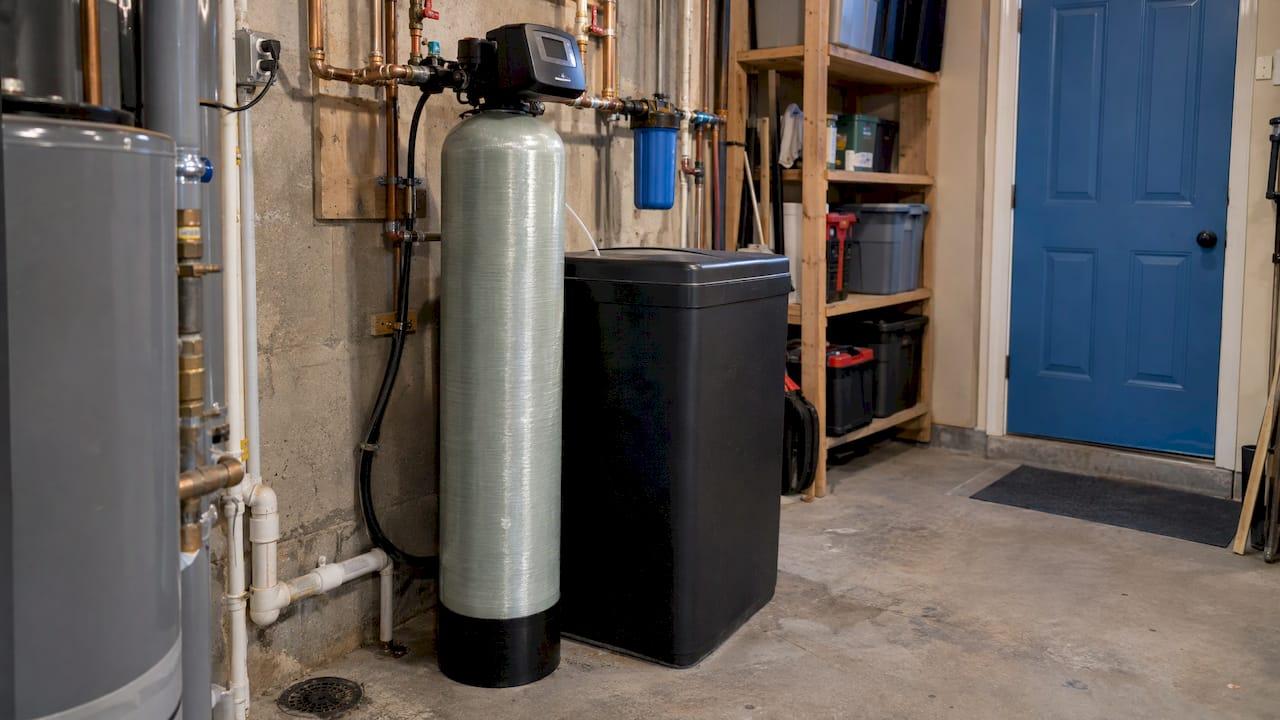
A softener has a mineral tank filled with resin beads and a brine tank filled with salt. Hard water flows over the beads. The beads hold sodium ions and release them as they catch calcium and magnesium.
Over time the beads fill up. The system then regenerates. It flushes the beads with brine, rinses away the captured hardness, and restores the sodium. This uses salt and water, and it sends salty wastewater to your drain or septic system.
What you get in return:
- No chalky scale on faucets, showerheads, and tile.
- Less scale inside water heaters and appliances.
- Soap and shampoo that lather more easily.
- Fewer water spots on dishes and glass.
What it asks of you: salt refills, a drain connection, and an occasional service check. The beads eventually wear out and need replacement.
How a salt-free conditioner works
A TAC conditioner has one tank with a special media. Water passes through, and hardness minerals form microscopic crystals. The crystals stay in the water but do not cling to surfaces the way ordinary scale does.
There is no brine tank, no regeneration, and no wastewater from the process. Most units need no electricity. The media is typically replaced on a multi-year schedule.
The trade-off is in the results. Because the minerals stay in the water, you should not expect the same feel or lather. One industry explainer notes that salt-free conditioners do not eliminate water spots or give a soft-water feel. Treat that as a reasonable description of what the technology is designed to do. A conditioner is about scale control, not about changing the water itself.
Side-by-side comparison
| Feature | Salt-based softener | Salt-free conditioner |
|---|---|---|
| Removes hardness minerals | Yes | No |
| Main purpose | Soft water and scale prevention | Scale reduction |
| Lather and soft feel | Noticeably improved | Not designed to change |
| Water spots on glass | Fewer | Not designed to reduce |
| Salt needed | Yes | No |
| Wastewater from regeneration | Yes | No |
| Drain connection | Required | Usually not required |
| Upkeep | Salt refills, periodic service | Media replacement on a schedule |
| Best fit | Hard water and soft-water goals | Mild scale concerns, no-salt preference |
Do electronic and magnetic descalers work?
This is the third option people run into. These devices clamp onto a pipe or wrap it with a coil. They claim to change how minerals behave using a magnetic or electric field. They are not the same as TAC conditioners.
The independent evidence is thin:
- Virginia Cooperative Extension says physical-treatment devices do not change measured water hardness and that their effectiveness remains uncertain.
- A 2021 test-protocol study found a cation-exchange softener reduced scale by more than 99%. The electric-field and magnet devices it tested reduced scale by about 5%.
- A Water Quality Association task force described the science of magnetic treatment as still in its relative infancy, with much more research needed. That report dates from 2001.
If scale is the problem, we would not spend money on a clamp-on device and hope. Pick a proven method and confirm it against your hardness test.
What each system costs to own
Purchase price is only part of it. Think in three parts: equipment, installation, and what you pay each year.
Softener. Ongoing costs include salt, water for regeneration, and an annual service check. The resin bed will eventually need replacement. Installation involves a drain line, a water supply connection, and often a bypass. Our water softener installation cost guide for Rogers homes walks through what a quote should include.
Conditioner. There are no salt costs and no regeneration water. The ongoing cost is media replacement. The unit can be simpler to install because there is no drain line for brine.
Prices vary widely by brand, tank size, and the layout of your plumbing. That is why a line-by-line quote matters more than a national average. Ask any installer to separate equipment, labor, fittings, permits where required, and any bypass or plumbing changes.

Water use, salt, and local rules
Softener efficiency varies a lot. EPA guidance published in May 2026 says water-efficient salt-based softeners should use 5 gallons of water or less per 1,000 grains of hardness removed, with a salt efficiency above 3,350 grains per pound of salt. The same guide recommends demand-initiated regeneration, meaning the unit regenerates based on actual water use instead of a fixed calendar timer, and NSF/ANSI 44 certification.
Two more EPA points worth acting on:
- Bypass the softener for outdoor irrigation. Lawns and gardens usually do not need softened water, and bypassing saves salt and water.
- Consider softening only the water that needs it, such as hot water.
EPA also notes that some jurisdictions limit softener use or require measures to minimize water waste and protect water quality. Check local codes before you buy. If you are on a septic system, tell your installer so the drain plan fits.
How to choose for your home
Work through these steps in order.
- Test your water hardness. Your water utility may publish it. If you are on a well, test it. EPA's guide treats hardness above about 10 grains per gallon as a common threshold for considering a softener.
- Name the problem. Is it chalky buildup on fixtures? Spotted dishes? Dry skin and poor lather? A short-lived water heater? Scale-only problems point toward either system. Soft-feel problems point toward a softener.
- Check for other water issues. Salt-free alternatives often do not manage iron, manganese, or bacteria, as the Nebraska Extension guide points out. Also, no single technology solves every water quality problem. A softener is not a purifier either. If you suspect those issues, get a full water test before you buy anything.
- Check your plumbing. A softener needs a drain, a power outlet, and floor space. A conditioner is often easier to place. Our crew can look at your setup and tell you what fits.
- Decide about salt. If you want to avoid salt, brine discharge, or regeneration water, a conditioner fits that preference. Just set your expectations to scale control only.
- Ask about code and septic. Confirm local rules and how brine discharge is handled.
EPA's own advice is to install a softener only where hardness is substantial or where a water professional, utility, or local code recommends one. Virginia Extension adds a practical idea: match treatment to use. If sodium is a concern, soften only the streams that need it.
Signs your hardness is causing trouble
White crust on faucets and showerheads. Cloudy glassware. Soap that will not rinse clean. Slow-flowing fixtures. A water heater that runs loud or loses efficiency. If shower glass is your main complaint, a guide on how to remove hard water shower stains helps with cleanup while you decide on treatment. Cleaning treats the symptom. Treatment addresses the cause.
Whole-house or point-of-use
A whole-house system treats everything entering the home. Under-sink filters and carbon units address taste and some contaminants, but they do not replace a softener for hardness. If you want to compare filtration choices, see our whole house filter cost guide. If you have a tank or tankless water heater, hardness shortens its life, so read our water heater replacement cost guide and tankless water heater cost breakdown as well.
Perspective
In Rogers, we see the same pattern. A homeowner buys a conditioner expecting soft water, then calls us because the glass still spots and the shower still feels the same. The product did what it was designed to do. The expectation was the problem.
Our advice is simple. Decide what result you want first. If you want water that feels and lathers soft, and fewer spots across the house, a properly sized salt-based softener is the system built for that. We install them with a proper drain, a bypass for outdoor lines, and demand-initiated regeneration so salt and water are not wasted.
If your main concern is scale in the pipes and you want no salt, a conditioner is a legitimate choice. We will tell you plainly what it will and will not change.
Either way, test first. Treat the hardness you have, not the hardness the ad describes. A short visit to look at your plumbing saves a lot of guessing.
Jonathan
Installing the right system in Rogers, AR
JoCo Plumbing installs water softeners and water treatment systems for homes and businesses in Rogers and nearby areas. We check your plumbing layout, set up the drain and bypass, and explain the options in plain terms. Our water softener installation page shows what the service covers.

Need more than a softener? Our whole house water treatment systems page covers broader setups. To book a visit, start at our water treatment services page or contact us through joco.plumbing.
FAQ
Is a water softener the same as a water conditioner?
No. A softener removes calcium and magnesium through ion exchange. A conditioner, usually salt-free, leaves the minerals in the water and changes how they form scale. Some people use "conditioner" loosely to include softeners, so check how the product actually works.
Is a water softener worth it?
It can be, in a home with substantial hardness. EPA says to install one where hardness is substantial or where a water professional, utility, or local code recommends it. It also warns that softeners can use significant water and create salty brine, so size it correctly and choose an efficient model.
Which is better, salt or salt-free?
That depends on the goal. Salt-based systems remove hardness and deliver the soft-water results most people expect. Salt-free systems skip the salt and regeneration water but focus on scale reduction. Match the system to the problem you are trying to fix.
Do electronic water descalers work?
Independent evidence is weak. Virginia Cooperative Extension says physical-treatment devices do not change measured hardness, and a 2021 study measured only about a 5% scale reduction for the electric and magnetic devices it tested. A softener reduced scale by more than 99% in the same study.
Can I soften only part of my house?
Yes. EPA suggests bypassing the softener for outdoor irrigation and considering softening only the water that needs it, such as hot water. A plumber can set up the bypass and plan the lines.
Sources
- Soften Water Without Wasting It: Guide to Selecting and Using a Water Softener (EPA, May 2026)
- WaterSense Labeled Homes Technical Sheet: Water Softeners (EPA)
- Drinking Water Treatment: Salt-Free Water Softener Options (University of Nebraska-Lincoln Extension)
- Virginia Household Water Quality Program: Hardness in Household Water (Virginia Cooperative Extension)
- A Standardized Test Protocol for Evaluation of Scale Prevention Devices (PubMed Central, 2021)
- Magnetic Treatment Task Force Report (Water Quality Association, 2001)
- Salt-Based vs. Salt-Free Water Softeners
- How To Remove Hard Water Stains From Your Shower