A toilet that keeps running almost always has a worn or misaligned part inside the tank. The flapper is the usual culprit, followed by the fill valve and the float setting. You can find which one with a food-coloring test and a look at the water level. Most fixes take under an hour. If the parts are fine and the water still runs, or you would rather not open the tank, we can send a licensed plumber.
This guide shows how to diagnose the problem, fix each cause, and decide when to stop.
TL;DR
- Most running toilets are caused by a worn flapper that no longer seals the tank. The fill valve is the second most common cause.
- Put food coloring in the tank. If color reaches the bowl without flushing, the flapper or flush valve seat is leaking.
- If the tank water sits above the overflow tube, the float is set too high or the fill valve is not shutting off.
- A running toilet can waste thousands of gallons a day and raise your water and sewer bills, so do not wait.
- If the cause is not in the tank, or you cannot make the repair, call a licensed plumber.
Table of Contents
- How a toilet tank works
- Why a toilet keeps running: the common causes
- Diagnose it in 15 minutes
- How to fix each cause
- What a running toilet costs you
- When to stop and call a plumber
- Perspective: what we see on service calls
- Need a hand with the repair?
- Keep it from happening again
- FAQ
- Sources
How a toilet tank works
You need a basic picture of the tank before you diagnose anything. Three parts matter.
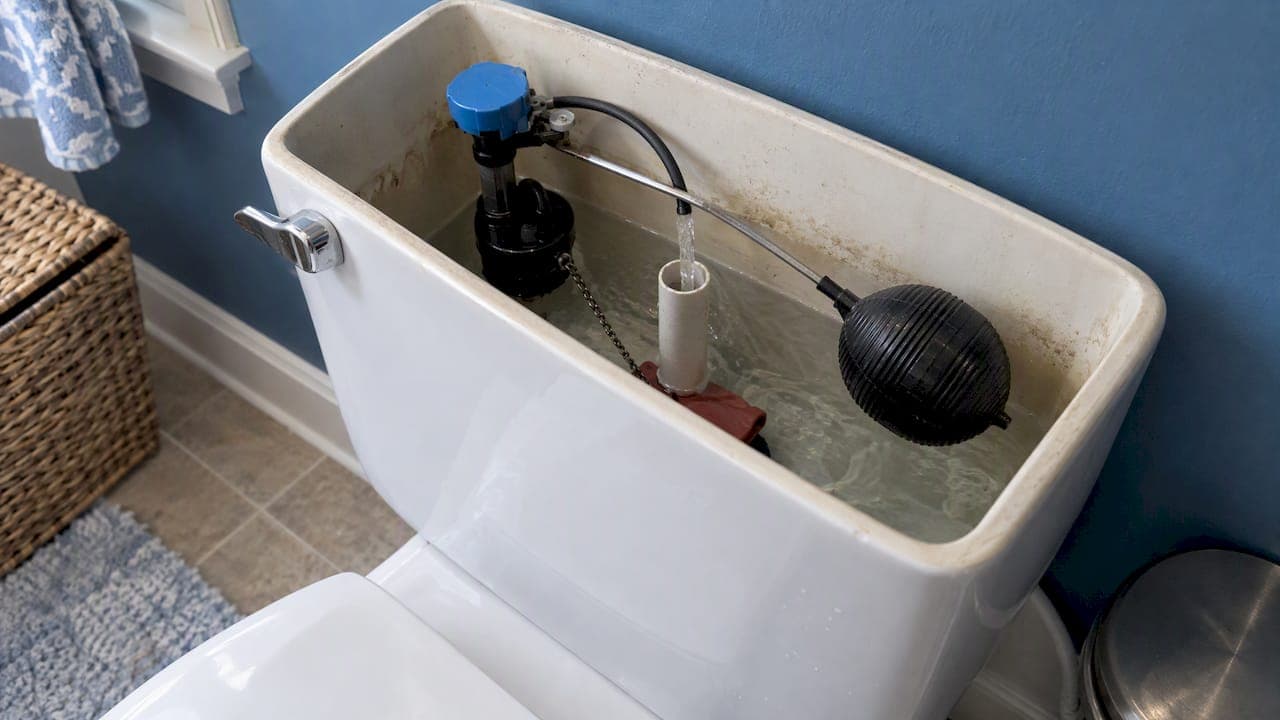
- Flapper. A rubber seal at the bottom of the tank. It lifts when you flush and drops back to hold water in the tank.
- Fill valve. It refills the tank after a flush and shuts off when the float reaches the set height.
- Overflow tube. A vertical pipe that sends excess water down into the bowl so the tank never spills onto the floor.
A toilet runs for one of two reasons. Water leaks from the tank into the bowl, so the fill valve keeps topping it up. Or the fill valve never shuts off, and water keeps flowing into the overflow tube.
That split drives the whole diagnosis. Find which of the two is happening, and the repair is usually obvious.
Why a toilet keeps running: the common causes
A worn or leaking flapper
The Saving Water Partnership says most running toilets are caused by a worn-out flapper that no longer seals the tank, so water leaks into the bowl. New York City's DEP names the flapper and the fill valve as the two most common causes of toilet leaks.
Rubber hardens, warps and collects mineral film over the years. The flapper then stops sitting flat on its seat.
A chain that is too short, too long or tangled
The chain links the flush handle to the flapper. Portland's water bureau says a misaligned flapper, loose handle or wrong-sized chain can keep a toilet running.
Too little slack holds the flapper slightly open. Too much slack can let the chain slip under the flapper and block it from closing.
A fill valve that will not shut off
Kohler says that sediment or debris under the fill valve cap can stop the water from turning off. Debris often gets loosened when water is shut off or turned back on, for example after plumbing work or a main break.
A float set too high
The float controls the point where the fill valve shuts off. Portland says the correct level is about one-half to one inch below the top of the overflow tube. If the tank level is above the overflow tube, the Saving Water Partnership says the toilet will run continuously until you lower the float.
A binding handle or trip lever
Kohler also lists a binding trip lever as a cause. If the handle sticks after a flush, it holds the chain tight and the flapper cannot drop.
Why it only runs sometimes
Intermittent running confuses people because the toilet seems fine for hours. The Saving Water Partnership explains that an aging flapper may seal after some flushes but not others, and water can dribble into the bowl between flushes.
The tank slowly loses water through a poor seal. When the level drops far enough, the fill valve kicks on for a few seconds. People call this a phantom flush. Treat it as a flapper problem until you prove otherwise.
Diagnose it in 15 minutes
Do these tests in order. They need no tools.
Step 1: Run the dye test
Remove the tank lid and put several drops of food coloring in the tank. Do not flush. The Saving Water Partnership says to wait at least 10 minutes, and that color showing up in the bowl means a leak, probably at the flapper. Portland suggests a dye tablet or food coloring and a wait of at least 15 minutes. Waiting 15 is the safer choice.
Flush afterward so the dye does not stain the tank.
Step 2: Look at the water level
Is the water above the top of the overflow tube, with water trickling into it? Then the problem is the float or fill valve. Is the water below the tube and the fill valve keeps cycling? Then the flapper is probably leaking.

NYC DEP gives a more precise version. Mark the tank level, then watch. If the water rises above the mark and then falls, a flapper leak is likely. If it rises below the mark and then continues above it, a faulty fill valve is likely.
Step 3: Shut off the supply and watch
Korky's test separates the two causes cleanly. Mark the tank level after it refills, shut off the supply valve, and wait at least 25 minutes. A drop in the water level points to an internal leak at the flapper or flush valve seal. If the level stays put, the leak is not from the tank into the bowl.
Quick reference
| What you see | Likely cause | First fix |
|---|---|---|
| Dye reaches the bowl | Worn flapper or dirty seat | Clean the seat, replace the flapper |
| Water level drops after the supply is off | Flapper or flush valve seal | Replace the flapper or seal |
| Water flows into the overflow tube | Float too high or fill valve not closing | Lower the float, flush debris, replace the valve |
| Handle sticks after flushing | Binding trip lever | Loosen and reposition, or replace the handle |
| Short refill every few minutes | Slow flapper leak | Replace the flapper |
How to fix each cause
Adjust the chain and handle
This is the easiest fix, so try it first. Portland advises adjusting the chain and tightening the handle nut, and replacing the handle if needed. The goal is a small amount of slack, so the flapper falls fully into place and the chain never lies under it.
Replace the flapper
The Saving Water Partnership lists the steps. Here they are in plain order.
- Shut off the supply valve at the wall.
- Remove the tank lid and flush to drain the tank.
- Disconnect the chain and remove the old flapper.
- Install a matching replacement flapper.
- Reconnect the chain with a little slack.
- Turn the water back on and test-flush.
See the full flapper replacement steps on their page.
Two details save a second trip to the store. First, take the old flapper with you or note the toilet brand and model, because sizes and styles differ. American Standard notes that its Champion flush-valve designs changed over time, so the right part depends on the valve version. Second, check the flapper seat. Portland advises looking for corrosion on the valve seat and cleaning it when needed before aligning the new flapper with it. A pitted seat will leak around a brand new flapper.
Clean or replace the fill valve
If water keeps flowing after the tank is full, start with cleaning. Kohler recommends flushing the fill valve with a plastic cup to remove sediment. If it still runs, replace the fill valve with the part specified for your toilet model. Korky's guidance is similar: adjust, clean or replace the fill valve if water runs after the tank is full.
Reset the float
Adjust the float so the water stops at the fill line marked in the tank, or at the overflow tube level the Saving Water Partnership describes. Use the one-half to one inch rule from Portland as your target. Flush once and check that the level settles below the tube.
Skip the tank cleaning tablets
Drop-in chlorine cleaners are a common cause of repeat failures. NYC DEP warns that in-tank chlorine cleaners can corrode flappers and other tank parts, cause leaks, and may void the toilet warranty. If your flapper keeps failing within a year or two, check whether a tablet sits in the tank.
What a running toilet costs you
The water bill is the main cost. NYC DEP says a leaking toilet can waste three to five gallons per minute, up to 4,000 gallons per day, and that it can raise water and sewer bills noticeably. Most household leaks are far smaller than that worst case. But a small leak runs all day and all night, so it adds up.
A running toilet also keeps a pump or well system cycling if you are on well water. Septic owners should care too, because constant flow adds load to the tank and drain field. If you have a septic system, read our guide to septic backup signs.
Repair costs depend on the part, the toilet and the time involved. A flapper or fill valve is a small part, and the labor is short. We give a clear quote before work starts, so you know the number before we begin.
When to stop and call a plumber
DIY has limits. Call a plumber if any of these apply.
- You replaced the flapper and fill valve and the toilet still runs.
- The tank is cracked, or the flush valve seat is damaged or pitted beyond cleaning.
- You cannot shut off the supply valve, or it leaks when you turn it.
- The shutoff valve is stuck, corroded or old, and you worry it will break.
- The toilet is old enough that parts are hard to match.
- Water appears around the base of the toilet or on the floor.
- Your water bill is high and no fixture is visibly running.
NYC DEP's advice is to call a licensed plumber if you cannot make the repairs yourself. In Arkansas, use a licensed plumber as well.
If you have ruled out the toilet and your bill is still climbing, the leak may be elsewhere. Our leak detection and repair service finds hidden leaks in supply lines and under the home. For warning signs under a concrete floor, see our guide to slab leak signs and the meter test.
If the toilet is old, cracked or repeatedly failing, replacement may cost less than another repair. Our guide to toilet replacement cost explains what to budget.
Perspective: what we see on service calls
We get called for running toilets after the homeowner has already tried a part or two. The usual story is the same. The wrong flapper was installed, the chain has no slack, or the seat was never cleaned.
We suggest working in order. Run the dye test, check the level, and change one part at a time. Replacing three parts at once hides which one was the problem and often leaves the real cause in place.

We also treat a running toilet as a sign to look at the rest of the house. If one toilet has a worn flapper, others of the same age probably do too. If the supply valve is stiff, it will fail when you need it most. Fixing these items together saves a second visit.
Our team is licensed and we price jobs openly. If the cause turns out to be in the line or the drain and not the tank, we have the tools to find it, including video camera inspection.
— Jonathan
Need a hand with the repair?
JoCo Plumbing serves Rogers, AR and the surrounding area. We repair and replace toilets, faucets and supply lines, and we respond quickly when water will not stop. If the toilet is overflowing or you cannot shut the water off, use our emergency plumbing repairs page. For everything else, start at JoCo Plumbing and book a visit.
Keep it from happening again
- Replace the flapper every few years, or when you see dye in the bowl.
- Skip in-tank chlorine tablets.
- Check the tank water level when you change any part.
- Exercise the shutoff valve once a year so it does not seize.
- Listen for a hiss or refill sound when no one has flushed.
- Do the dye test twice a year, or when your bill jumps.
FAQ
How do you fix a toilet that keeps running?
Find the cause first. Add food coloring to the tank and check the bowl after 10 to 15 minutes. If color appears, replace the flapper and clean the seat. If the water flows into the overflow tube, lower the float, clean the fill valve or replace it.
What happens if you ignore a running toilet?
It wastes water around the clock and raises your water and sewer bills. NYC DEP puts the worst-case waste at up to 4,000 gallons a day. Small parts also wear faster the longer they run, so a cheap fix can turn into a bigger job.
Why does my toilet run on and off by itself?
The tank is slowly losing water into the bowl past a worn flapper. When the level drops enough, the fill valve turns on to refill it. Replace the flapper and clean its seat, and the phantom refills usually stop.
What is the most common cause of a constantly running toilet?
A worn-out flapper. The Saving Water Partnership says it is the cause of most running toilets, and NYC DEP lists the flapper and fill valve as the two most common causes. The chain length and float height are the next things to check.
Why is water trickling into the toilet bowl between flushes?
Water is leaking past the flapper or flush valve seal. The dye test will confirm it. A sticky handle that holds the chain tight can do the same, so check the chain slack before you buy parts.
Sources
- How to Fix a Running Toilet, Korky
- How to find and fix a toilet leak, Portland.gov
- Toilet Leaks, Saving Water Partnership
- Toilet Constantly Leaking or Running, Kohler
- Toilet Leak Detection, NYC DEP
- How do I fix a running American Standard Champion Toilet?