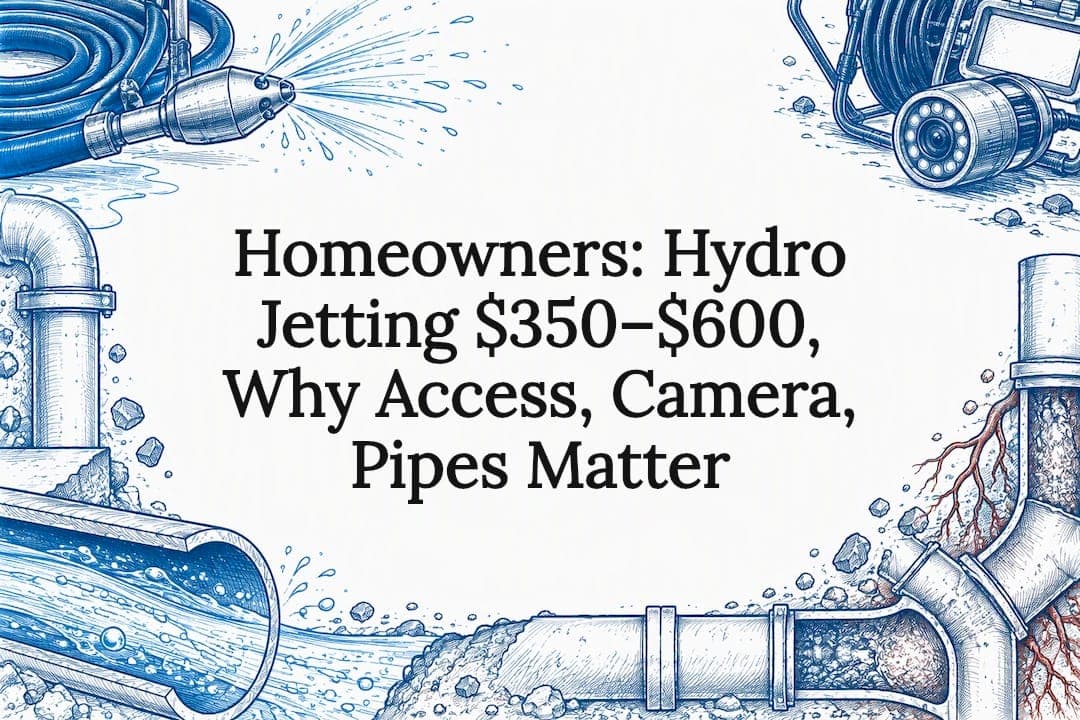
Hydro jetting typically costs between $350 and $600, with most homeowners paying an average of $475 for a standard sewer line clog. Simple jobs can run as low as $150, while severe blockages with root intrusion or major damage can climb to higher prices. A camera inspection before the work starts gives you the most accurate quote, since it shows the crew exactly what they're dealing with before they price the job.
TL;DR:
- Hydro jetting costs typically range from $350 to $600 for standard jobs, but severe blockages with roots or damage can exceed $1,000.
- A camera inspection before work helps determine if jetting is suitable and provides an accurate initial quote, especially for complex or damaged pipes.
- Accessibility issues, pipe material, and length significantly impact the price, with inaccessible lines or old clay pipes increasing costs.
- Additional fees often include camera inspections, root removal, debris cleanup, fixture removal, or installation of cleanouts, which can add hundreds to the initial quote.
- Comparing bids requires asking about included services like inspection, pressure settings adjusted to pipe type, debris disposal, and warranty coverage to avoid hidden charges.
Table of Contents
- What typical hydro jetting jobs cost
- Primary factors that influence hydro jetting cost
- Common add-ons and extra costs to budget for
- Value, risks, and when hydro jetting is worth it
- How to prepare for a hydro jetting appointment
- How to get accurate quotes and avoid overpaying
- How JoCo Plumbing approaches hydro jetting pricing
- What homeowners get wrong about hydro jetting cost
- Book a professional hydro jetting service with clear pricing
- Sources
- FAQ
What typical hydro jetting jobs cost
Price depends heavily on what's clogged and how bad it is. A small kitchen or bathroom drain with a simple grease clog sits at the low end. A main sewer line with moderate buildup lands in the middle. A severe blockage with roots, scale, or years of buildup pushes toward the high end.

National data backs this up. Typical hydro jetting for a clogged sewer line runs $350 to $600, though jobs can range from $100 to $2,000 depending on complexity. A separate cost aggregator puts typical home sewer-line jetting at $200 to $550, with quick jobs around $150 and severe cases reaching $1,000 or more. The ranges overlap enough to give you a reliable planning number.
Here's roughly what each price tier buys:
- Under $250: A single accessible drain line with a manageable clog and no camera work.
- $350 to $600: A standard main sewer line job, the most common scenario contractors quote.
- $600 to $1,000: Longer or harder-to-reach lines, moderate root intrusion, or jobs needing extra passes.
- $1,000 and up: Severe blockages, extensive root removal, or lines requiring fixture removal to access.
Where you live and when you call both move the number. Labor rates vary by region, and after-hours or emergency calls usually carry a premium on top of the base price. A midday appointment on a weekday is almost always the cheapest option.
Primary factors that influence hydro jetting cost
Two homes with the same symptom can get very different quotes, and it usually comes down to a handful of variables a contractor checks before naming a price.
- Severity and type of clog. Grease buildup clears faster than tree roots or mineral scale, which need higher pressure and more passes.
- Accessibility. A house with an exterior cleanout is cheaper to service than one where the crew has to pull a toilet or run equipment through a roof vent.
- Pipe length and diameter. Longer runs and wider pipes take more time, water, and hose length.
- Pipe material and age. PVC handles high pressure well; older clay, cast iron, or a CIPP (cured-in-place pipe) liner needs a gentler setting and more caution.
- Required flow and nozzle selection. Municipal guidance recommends pressures often between 1,500 and 3,500 psi and flow rates from 50 to 125 gpm depending on pipe size, and matching the wrong nozzle to the wrong pipe either wastes time or risks damage.
- Labor, travel, and disposal. Municipal specifications require truck-mounted equipment, trained operators, and proper debris disposal after every job, and that cleanup work adds time a flat quote has to account for.
Accessibility is the factor homeowners underestimate most. The absence of a cleanout is often the single biggest cost driver on a job, since crews may need to remove a toilet or cut in new access, and installing a cleanout alone can run $800 to $1,500. Pipe material runs a close second. A crew jetting a fragile clay line follows different pressure guidance than one working on modern PVC, and that caution takes more time, not less.
Pro Tip: Ask your contractor what psi and gpm range they plan to use on your pipe material. A specific answer signals a crew that adjusts equipment to your plumbing instead of running one setting on every job.
Common add-ons and extra costs to budget for
The base jetting fee rarely covers everything. These extras show up often enough that they're worth budgeting for before you get a quote:
- Camera inspection. A video inspection to confirm the clog and check pipe condition runs $271 to $1,725 depending on line length and camera type.
- Tree-root removal. Cutting and clearing roots typically adds $100 to $600 on top of standard jetting.
- Sewage backup cleanup. If the clog caused a backup, sanitizing and cleaning affected areas adds to the invoice, priced separately from the jetting itself.
- Fixture removal and reinstall. Pulling a toilet for access and putting it back typically runs $50 to $200 for removal, plus roughly $375 to reinstall.
- Cleanout installation. When there's no existing access point, installing one costs $800 to $1,500, a one-time expense, making future service cheaper.
- Repair if damage is found. A camera pass sometimes reveals a cracked or collapsed section, which turns into a separate repair or replacement line item.
Ask for every one of these to be itemized on your estimate before work starts. A quote that lumps everything into one number makes it hard to tell what you're actually paying for.
Value, risks, and when hydro jetting is worth it
Hydro jetting clears the full diameter of a pipe, while snaking just punches a hole through the clog. That's why jetting tends to prevent repeat visits for grease and scale buildup that snaking leaves behind on the pipe walls.
It isn't right for every pipe, though. Older clay lines, deteriorated cast iron, and some CIPP liners can be damaged by pressure settings that work fine on PVC. Municipal operations guidance treats pressure and flow as variables that change with pipe condition, not a single setting used everywhere.
Operator skill matters as much as the equipment. Industry guidance warns against DIY attempts because the wrong pressure or nozzle choice can push debris into branch lines or damage plumbing instead of clearing it.
A camera inspection before jetting answers the question of whether your pipe can handle it. It's the cheapest insurance against paying for a repair that a different nozzle setting could have avoided. For most homeowners dealing with recurring clogs, slow drains across multiple fixtures, or grease and root buildup, jetting is worth the cost over repeated snaking visits. For a pipe already showing cracks or severe deterioration on camera, repair or replacement is usually the smarter first step.

How to prepare for a hydro jetting appointment
A little prep keeps the visit short and the invoice predictable.
Before the crew arrives:
- Clear access to the cleanout or the fixture the crew will use to reach the line.
- Locate your cleanout ahead of time if you know where it is, and mention it when booking.
- Secure pets and keep the work area clear for hoses and equipment.
During the visit, a typical process runs in this order: camera inspection to confirm the problem, jetting to clear the line, debris removal and disposal, then a second camera pass to confirm the pipe is clear. Many contractors note any findings and warranty terms on the invoice at this point.
A single drain usually takes under an hour. A full main line with moderate buildup often runs one to two hours, and severe blockages or fixture removal can extend the visit longer.
Before the crew leaves, ask for an itemized invoice, a copy of the video inspection, and the warranty terms in writing.
How to get accurate quotes and avoid overpaying
The questions you ask before hiring shape the final bill more than almost anything else.
Ask every contractor:
- Is a camera inspection included, and will I get a copy of the footage?
- What psi and gpm range do you plan to use for my pipe material?
- Is disposal of debris included in the quote?
- How long is the service warranty, and what does it cover?
- Are you licensed and insured, and can you show proof?
Watch for red flags: a quote with no itemized breakdown, no video inspection offered, pressure to approve repairs before any inspection happens, or reluctance to show license and insurance documents. A fair warranty commonly runs 30 days or more, since thorough jetting tends to reduce callbacks.
Pro Tip: Compare bids by structure, not just total price. A flat-rate quote that includes camera work and disposal is often a better deal than a lower hourly rate with add-ons charged separately.
Scheduling and routing also affect what a company can charge. Contractors who manage jobs efficiently, using job tracking tools built for drainage specialists, can sometimes offer tighter pricing because less time gets lost between appointments.
How JoCo Plumbing approaches hydro jetting pricing
JoCo Plumbing offers hydro jetting as part of its drain cleaning services, alongside video camera inspections, leak detection, and water and sewer line repair. The company runs on transparent pricing and licensed technicians, so estimates are built around what the inspection actually finds rather than a flat number quoted over the phone.
An inspection-first approach fits most jetting jobs well: a grease clog in a rental property's kitchen line, a main sewer backing up every few months, or root intrusion in an older line. For a pipe showing cracks, severe corrosion, or a failing joint on camera, the recommendation shifts toward repair or trenchless replacement instead of jetting a pipe that can't handle the pressure.
What homeowners get wrong about hydro jetting cost
The biggest mistake isn't overspending. It's comparing a bare number from one quote to a bare number from another without checking what's included. A $300 quote with no camera inspection and no disposal fee often ends up costing more than a $500 quote that includes both, once the missing pieces get added back in.
The conventional advice to "get three quotes" only works if you're comparing the same scope of work. Accessibility and pipe material matter more than most advice columns admit, because they change not just the price but whether jetting is even the right call.
If there's one thing worth prioritizing, it's this: pay for the camera inspection before you approve anything else. It turns a guess into a real number and tells you whether jetting will solve the problem or whether you're looking at a repair instead.
— Jonathan
Book a professional hydro jetting service with clear pricing
Clogged drains and slow sewer lines rarely fix themselves, and guessing at the cause usually costs more than finding out. JoCo Plumbing handles hydro jetting with licensed technicians, camera inspections to confirm the problem first, and transparent estimates before any work starts.

If your drains are backing up or running slow, get a camera inspection and hydro jetting quote from JoCo Plumbing before the problem turns into a bigger repair.
Sources
- How Much Does Hydro Jetting Cost? 2026 Data | Angi
- Cost of Hydro-jetting - Yelp
- Vitrified Clay Pipe Operations & Maintenance Handbook (NCPI)
- SECTION 02540 SEWER CLEANING | KUB (municipal spec)
FAQ
Is hydro jetting worth it?
For recurring clogs, grease buildup, or root intrusion, jetting clears the full pipe diameter and tends to prevent the repeat visits that snaking often leaves you with. It's less worth it on a pipe already showing damage on camera, where repair is the safer first step.
Can I do hydro jetting myself?
Renting equipment is possible, but professionals generally advise against DIY jetting because the wrong pressure or nozzle can push debris into branch lines or damage plumbing. Matching pressure to pipe material is exactly the judgment call a licensed operator is trained to make.
Why is hydro jetting so expensive?
The price covers more than water pressure. It includes trained operators, truck-mounted equipment meeting municipal specs, proper debris disposal, and often a camera inspection before and after the job to confirm the line is clear.
What are the signs I need hydro jetting?
Recurring clogs in the same drain, slow drainage across multiple fixtures, and gurgling sounds from pipes often point to buildup that basic snaking won't fully clear. A camera inspection is the most reliable way to confirm hydro jetting is the right fix before booking the work.