
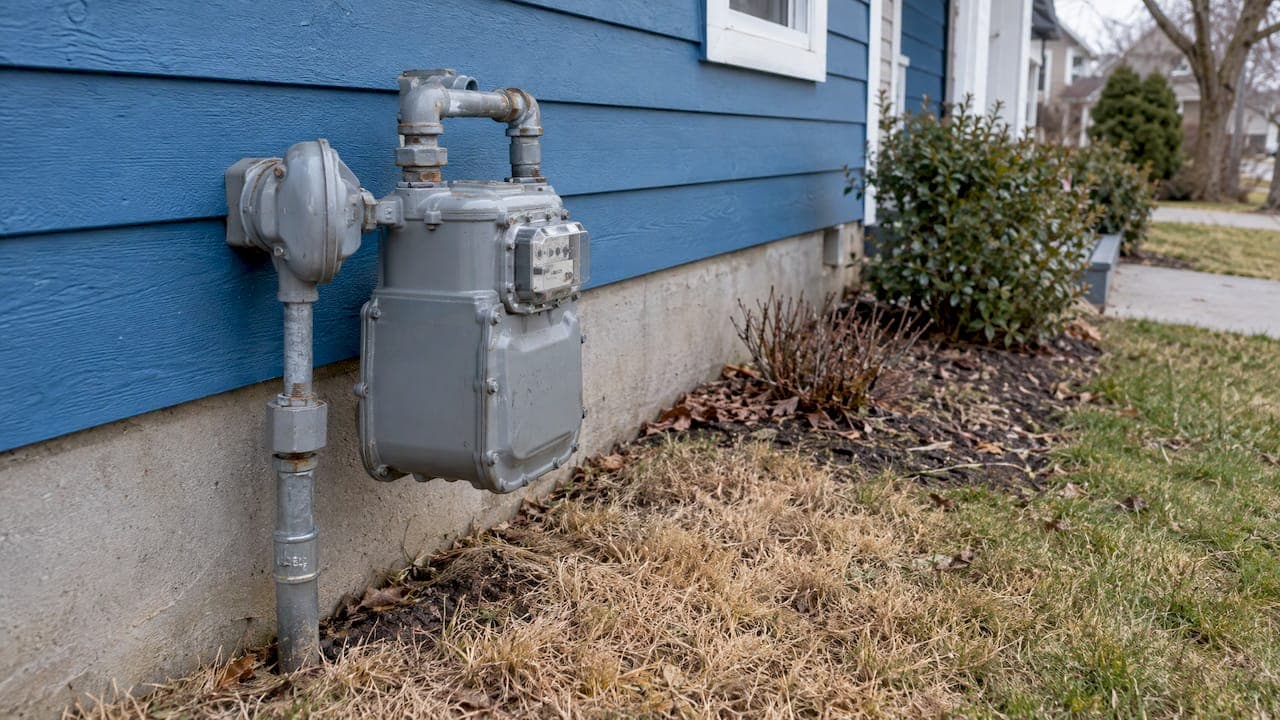
The most common sign of a gas leak is a rotten-egg or sulfur smell. Other signs are a hissing, whistling or roaring sound, blowing dust, bubbling water, and dead plants in one patch of yard. If you notice any of them, leave the building right away, avoid switches and anything that can spark, and call 911 from a safe distance. Do not look for the leak yourself.
This guide covers each sign inside and outside the home, the body's warning symptoms, the exact steps to take, and what happens after the gas company clears the scene.
TL;DR
- Smell, sound and sight are the three checks: rotten eggs or sulfur, hissing or roaring, and blowing dirt, bubbling water or dead vegetation.
- Headache, dizziness, nausea and fatigue that ease when you step outside can point to gas exposure.
- If you smell gas, leave first. Do not flip switches, use a lighter or start a car in the garage. Call 911, then your gas utility, from outside.
- Never try to find or repair a gas leak yourself. A licensed plumber handles the line after the utility says it is safe.
- Pipe repairs, appliance connections and new gas lines belong to a licensed professional, not a weekend fix.
Table of Contents
- The three checks: smell, sound, sight
- Signs inside the house
- Body symptoms that can signal gas exposure
- What to do if you smell gas
- After the all-clear: finding and fixing the cause
- Gas line problems versus water line problems
- Prevent leaks before they start
- Our perspective
- Gas line repair and installation in Rogers, AR
- FAQ
- Sources
The three checks: smell, sound, sight
Utility regulators teach the same three-part check. Use your senses, but only to decide whether to leave. They are not a way to locate the leak.

Smell: rotten eggs or sulfur
Natural gas has no color and no odor on its own. Utilities add mercaptan, which gives it a rotten-egg or sulfur smell, so people notice a leak early.
Two cautions apply:
- A faint smell still counts. A small leak can smell weak. Treat any gas odor as real until the utility says otherwise.
- Your nose can miss it. Smell can fade with a cold, allergies or long exposure to the odor. If you feel unwell and cannot explain why, do not rely on smell alone.
Other things smell like sulfur: a dry drain trap, a sewer vent problem or a failing water heater anode. Do not assume it is one of those. When in doubt, leave and make the call. You can sort out the cause afterward.
Sound: hissing, whistling or roaring
Gas escaping under pressure makes noise. Listen for a hissing, whistling or roaring sound near a meter, an appliance connection, or a buried line outside. A larger break can sound like an engine running.
Sight: what you can see outside
Gas from a damaged underground line changes what happens at the surface. Signs the IURC lists include blowing dirt, bubbling water, and dead plants or grass in an otherwise healthy area. The federal pipeline regulator adds that vaporous fogs or frozen ground in warm weather can also point to a pipeline leak.
Look for:
- A dead or brown circle in a green lawn, with no pet or fertilizer explanation
- Dirt or dust blowing from one spot with no wind
- Bubbles in standing water, a puddle or a wet area
- A white cloud or mist near a line or meter
- Frozen soil in mild weather
The soil around a leak can look odd because gas pushes oxygen away from plant roots. It can also travel. Gas from a damaged underground pipe can move through soil and seep into a home through foundation cracks, basement walls or plumbing lines. So a yard sign and an indoor smell may be the same leak.
Signs inside the house
Most indoor leaks start at a connection, not a pipe in the wall. Common places to notice trouble:
- Near the furnace or water heater. A gas smell around a heating appliance deserves the same response as any other gas smell. For more on what a furnace odor can mean, see this guide on what to do when a furnace smells like gas.
- At the stove or oven. A smell when no burner is on is a warning. A burner that will not light but keeps clicking while gas flows is another.
- At the dryer or fireplace line. Flexible connectors wear out, get bumped when appliances are moved, and can crack.
- At the meter. A leak at a gas meter is an emergency that needs immediate repair.
- Pilot lights that keep going out. This does not prove a leak, but it is worth having checked, and you should not relight a pilot yourself if you smell gas.
The soapy water test and its limits
The IURC notes that soapy water on a gas connection may show bubbles where gas escapes. That is a way to confirm a suspected leak at a visible fitting. It is not a way to hunt for one, and it does not replace leaving. If you smell gas strongly, get out first. If you want a connection checked, have a licensed technician do it.
Never use a match or lighter to find a leak. That is the one test that can end badly.
Body symptoms that can signal gas exposure
Sometimes the first sign is how you feel. Poison Control lists these symptoms of natural gas inhalation: headache, dizziness, nausea, vomiting, confusion, vision changes, incoordination, sleepiness, and possible loss of consciousness, because gas displaces oxygen. The same source notes that high concentrations can make the eyes feel dry and irritated.
What to watch for in a household:
- Several people getting the same headache or nausea at the same time
- Symptoms that fade when you leave the house and return when you come back
- Pets acting sluggish, sick or restless
- A sense of being drowsy or foggy in one room
If anyone is confused, faint, struggling to breathe or unresponsive, call 911 and get them to fresh air. Do not wait to see if it passes.
Gas leak or carbon monoxide?
They are different problems with overlapping symptoms. Natural gas is the fuel that leaks. Carbon monoxide is a byproduct of incomplete burning in a furnace, water heater or other fuel-burning appliance. CO has no smell at all. Headache and dizziness without any gas odor can point to CO, which needs a CO alarm and a technician. This overview of furnace carbon monoxide warning signs explains what homeowners can ask a heating contractor to test. In both cases the first step is the same: get everyone outside into fresh air and call for help.

How long does it take for a gas leak to harm you?
There is no safe waiting time, and no reliable number we can give you. The effect depends on how much gas is escaping, the size of the space, ventilation and who is exposed. Gas can also be explosive at the right air-to-gas ratio, and that risk exists before anyone feels sick. A single spark from a switch or a phone charger can be enough. Leave first, then sort out the cause.
What to do if you smell gas
The steps are short. Learn them before you need them.
- Stop what you are doing. Put down the lighter, the cooking, the phone charger.
- Do not touch switches. No light switches, garage door openers, thermostats or appliances. The IURC tells people to leave without flipping switches or creating sparks.
- Get everyone out. Take family members and pets. Open doors on the way if it is quick and safe, but do not stay to ventilate.
- Move far away. Go to a safe spot well away from the building, upwind if you can.
- Call 911 from outside. Use a cell phone or a neighbor's phone, not a phone inside the house.
- Call your gas utility. In much of Northwest Arkansas that is Black Hills Energy, which has told customers to leave the home, call 911, then call its emergency line from a neighbor's home or a cell phone. Check your bill for your provider's number and save it in your phone today.
- Stay out until you are told it is safe. The utility or fire department clears the building.
Do not try to fix it. The IURC is plain on this: do not try to find or fix a leak yourself. Leave and contact your gas provider and 911.
What not to do
- Do not turn lights or fans on or off
- Do not use a landline, a garage opener or a doorbell inside
- Do not start a car parked in an attached garage
- Do not light candles, cigarettes or a gas stove to "check"
- Do not go back for belongings
After the all-clear: finding and fixing the cause
The utility responds to the leak. It usually shuts off or repairs its own equipment, up to the meter. Gas piping beyond the meter, in the house or yard, is generally the homeowner's responsibility. That is where a licensed plumber comes in.
Typical causes we see on the property side:
- Worn or damaged appliance connectors
- Corroded or loose fittings at the water heater, range, dryer or fireplace
- A buried yard line damaged by digging or shifting soil
- Old piping that no longer holds pressure
- A new appliance hooked up without a proper pressure test
A repair should include fixing the fault, testing the line and checking each appliance connection on that run. If your system is old, damaged or lacks a line for a new appliance, a new run may be the better route. For a sense of what a new line involves, read our gas line installation budget and estimate guide.
Gas line problems versus water line problems
People often mix up leak signs. A hiss behind a wall might be water, not gas. Wet spots, a spinning water meter and high bills point to water. Smell and dead patches of grass without moisture point to gas. If you are not sure, treat it as gas first. If it turns out to be water, our guides on slab leak signs and the meter test and what to do about a burst pipe cover the next steps. A leaking tank is a separate issue too: see what a leaking water heater means.
Prevent leaks before they start
Gas safety is mostly about habits and inspections.
- Know where your shutoff is. Find the main gas valve at the meter and the individual valves at each appliance. Ask a professional to show you how and when to use them.
- Install detectors. Natural gas detectors and CO alarms add a layer for the times your nose is not around. Follow the manufacturer's placement and replacement guidance.
- Call before you dig. Fences, trees and patios are common reasons for damaged underground lines. Arkansas has a call-before-you-dig system through 811.
- Replace old connectors. Flexible connectors on ranges and dryers age. Replace them when you move an appliance or see wear.
- Have appliances serviced. Furnaces, water heaters and fireplaces need routine checks.
- Inspect before you buy. A first-time homebuyer should ask for the gas piping and appliance connections to be checked as part of the inspection process.
- Keep the meter area clear. Do not stack items against it or let plants overgrow it.
On the utility side, distribution systems get surveyed too. In Washington, D.C., for example, the commission requires the gas company to survey the system every three years with vehicle-mounted sensors. Utility surveys do not cover the pipes inside your home, so your own checks still matter.
Our perspective
We get calls after the scary part is over. The gas is off, the house is aired out, and the owner wants to know what failed and whether it is safe to turn back on.
Our view is simple. A gas smell is never a plumbing project to start on your own. Leave, call, and let the utility and fire crew do their jobs. Then bring in a licensed technician to find the cause and fix it properly.
We look for the whole picture: the connection that leaked, the other fittings on the same run, the age of the line and whether the appliance was installed correctly. A patch that ignores the rest of the line only delays the next call. Where a line is worn or damaged, a full repair or replacement is often the better route. Where the problem is in the yard, we focus on repair methods that limit digging.
Clear communication matters in these jobs. We tell you what we found, what the repair involves and what it will take before the work starts.
Jonathan
Gas line repair and installation in Rogers, AR
JoCo Plumbing handles gas line installation and repair for homes and businesses in Rogers and nearby areas. We also cover leak detection, emergency plumbing repairs, water heater installation and replacement (tank and tankless), and video camera inspections.

If the utility has cleared your home and you need the cause found and fixed, see our gas line repair and installation page or request help through our emergency plumbing repairs page. If the problem looks like water rather than gas, our leak detection and repair service finds hidden leaks with minimal disruption. And if your water heater is the suspected source, we install and replace both tank and tankless units. Details are on our main site. Remember: if you smell gas right now, leave and call 911 first. Call us after.
FAQ
How can you tell if you have a gas leak?
Start with your senses. A rotten-egg or sulfur smell, a hissing or roaring sound, blowing dirt, bubbling water and dead patches of plants are the standard signs. Headache, dizziness and nausea that improve outdoors can also point to gas. If you notice any of these, leave and call 911 from outside.
What should I do if I smell gas in my house?
Do not touch switches, appliances or your phone inside. Walk everyone out, move well away from the building and call 911. Then call your gas utility's emergency line. Stay out until a responder says it is safe to return.
Can I find a gas leak myself?
Not safely. Soapy water on a visible connection can show bubbles, but a strong smell means you should leave, not test. Never use a flame. A utility crew or licensed plumber should locate and repair the leak with proper equipment.
What are the symptoms of natural gas exposure?
Poison Control lists headache, dizziness, nausea, vomiting, confusion, vision changes, poor coordination and sleepiness. Severe exposure can lead to loss of consciousness because gas displaces oxygen. Get out into fresh air and call 911 if anyone is confused, faint or struggling to breathe.
Who fixes a gas leak after the utility shuts it off?
The utility handles its own equipment up to the meter. Piping and appliance connections on the property side are repaired by a licensed plumber. Ask for a pressure test and a check of every connection on the affected line before gas is turned back on.
Sources
- IURC: Learn to recognize the signs of a gas leak
- PHMSA: Pipeline Leak Recognition and What to Do
- DCPSC: Natural Gas Leaks
- Poison Control: What does a natural gas leak smell like?
- Black Hills Energy: gas line response and emergency guidance
- Furnace smells like gas: what homeowners should do
- Furnace carbon monoxide risk: signs and tests